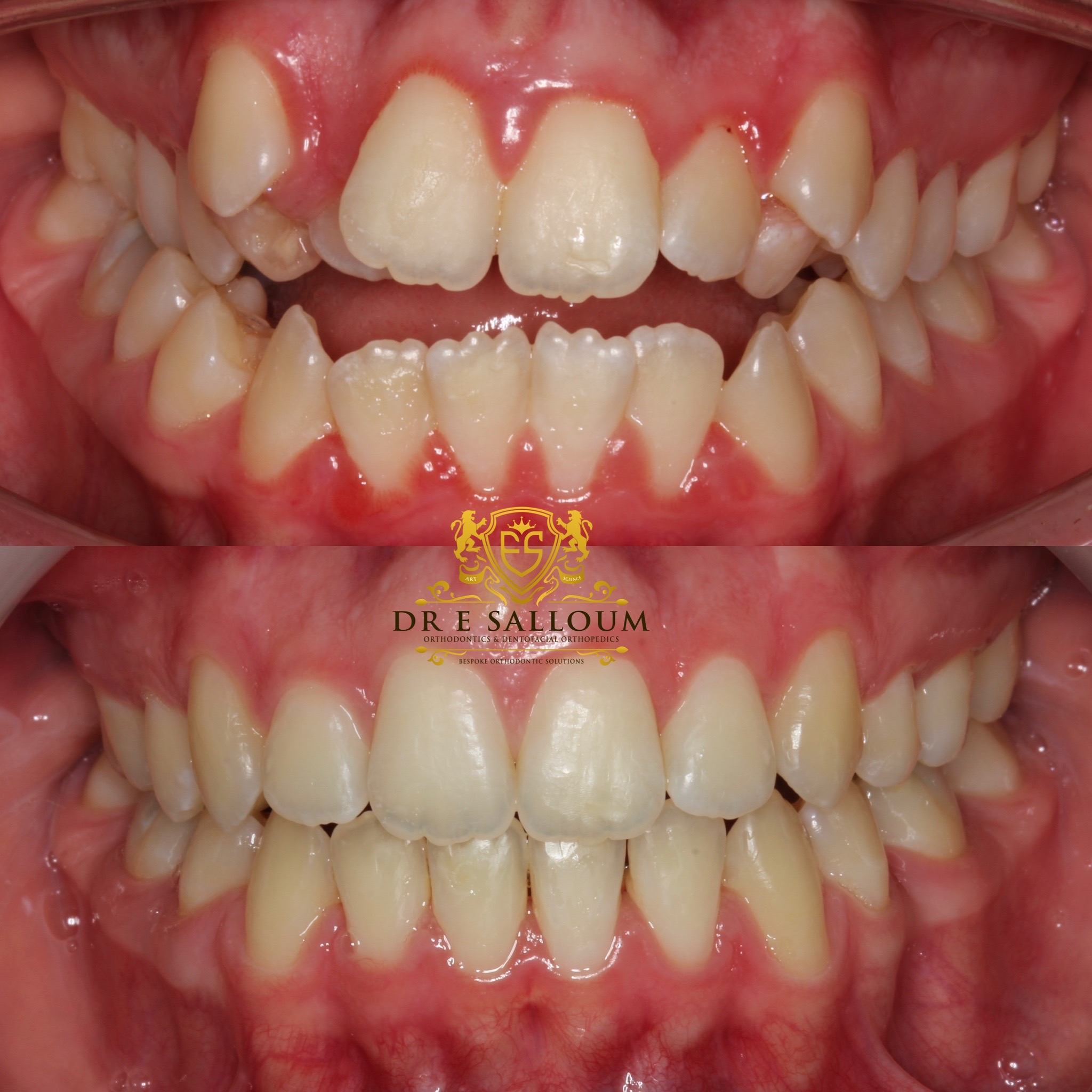
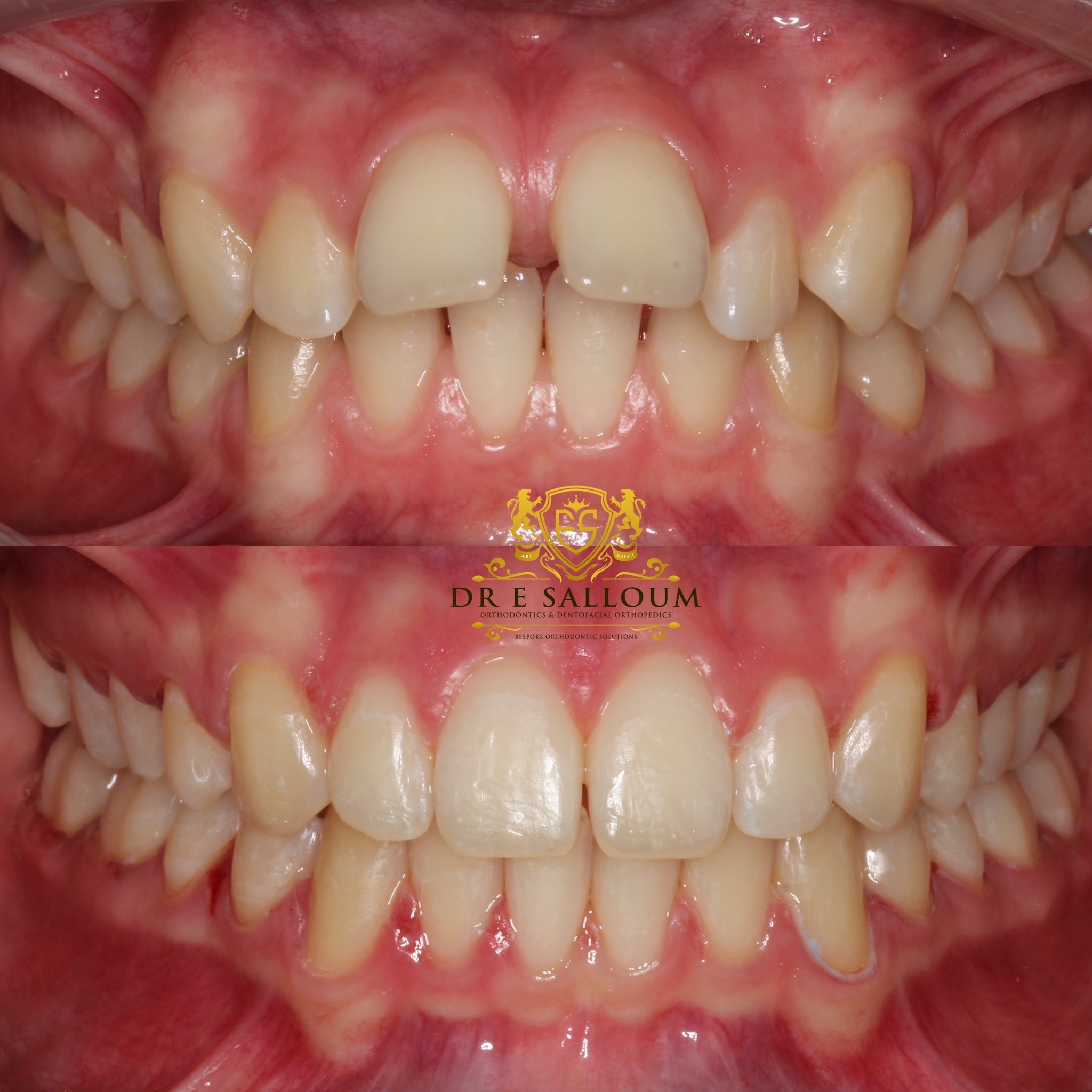
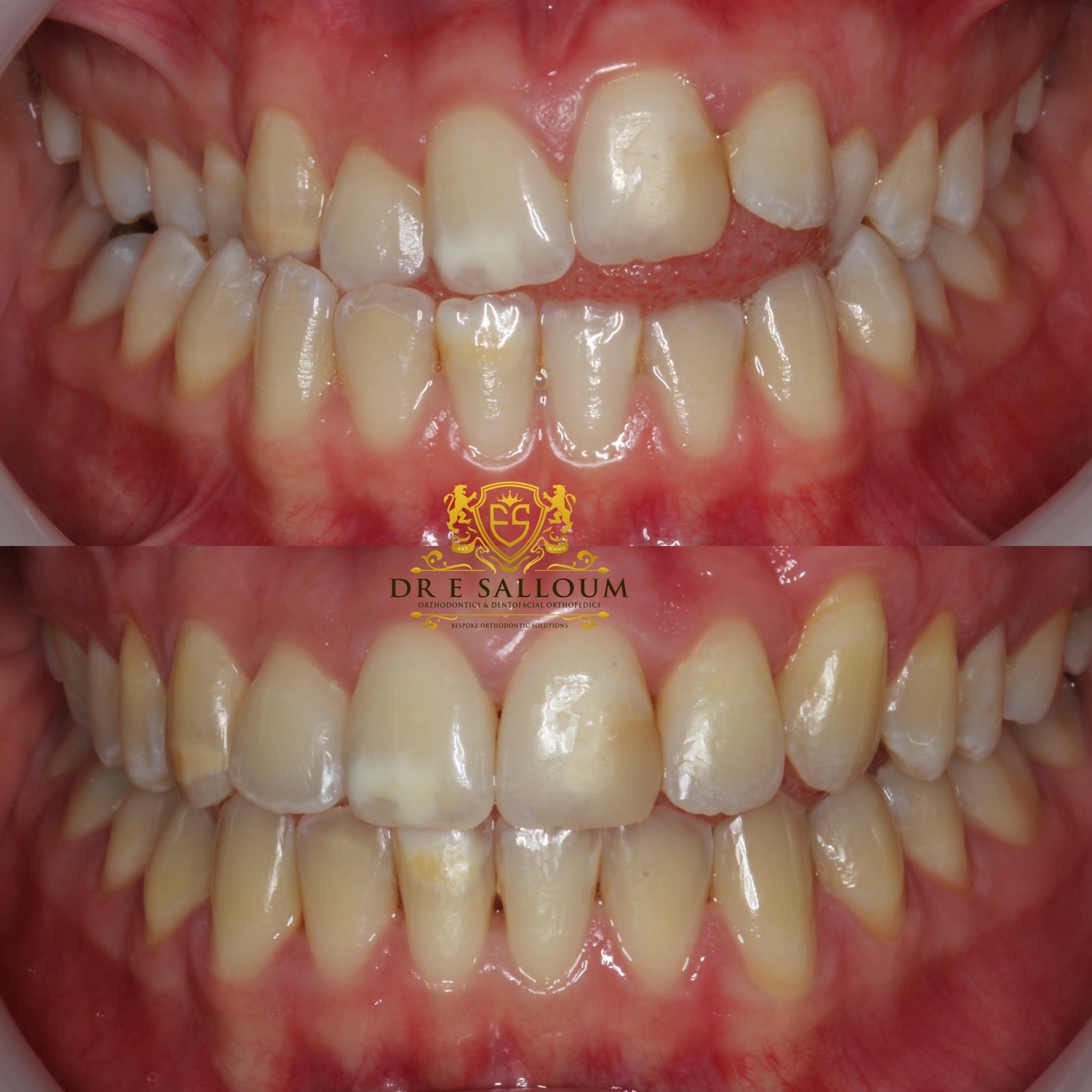
When it comes to orthodontic treatment, many patients seek options that are discreet and “invisible.” Clear aligners, such as Invisalign or similar brands, are often advertised as invisible solutions. However, this marketing claim can be misleading. The reality is that clear aligners are not entirely invisible and often come with visible attachments or buttons on your teeth that make them noticeable.
For those truly seeking an invisible solution, lingual braces such as Win, braces placed on the back of your teeth, are the only genuinely invisible treatment option. This blog will explore the differences between clear aligners and lingual braces, debunk common myths, and help you make an informed decision about your orthodontic journey.
Clear aligners are made of transparent plastic, but they often require attachments, buttons or other auxillaries to effectively move teeth. Attachments are small, tooth-coloured bumps bonded to the teeth to enhance the aligners’ grip. While they are colour-matched to your enamel, they are still visible, especially when they stain or discolour over time.
Some aligners also require elastic bands that attach to buttons on your teeth, which are even more noticeable. Furthermore, aligners can trap moisture or air, creating a shiny, reflective surface that catches light and draws attention.
Key Takeaway: Clear aligners are discreet but not invisible.
Clear aligners are excellent for treating mild to moderate orthodontic issues, such as minor crowding, spacing, or mild bite adjustments. However, they may not be as effective for complex cases like severe crowding, bite misalignments, or rotations of certain teeth. These cases often require fixed braces—either traditional metal braces or lingual braces.
Why? Clear aligners rely on patient compliance. If aligners are not worn for 20–22 hours a day or removed too frequently, the treatment can be delayed or become ineffective.
Key Takeaway: Clear aligners are not suitable for every case and depend heavily on the patient’s discipline.
While lingual braces may require a brief adjustment period, advancements in technology have made them much more comfortable than they used to be. Lingual braces are custom-designed for your teeth using state-of-the-art 3D imaging and CAD-CAM technologies, ensuring a precise fit that minimises discomfort.
Clear aligners, on the other hand, can still irritate the gums and cheeks, especially when switching to a new set. Additionally, the attachments used with clear aligners can feel bulky or awkward, particularly for first-time users.
Key Takeaway: Lingual braces and clear aligners both require an adjustment period, but comfort is subjective and depends on individual preferences.
Clear aligners are removable, which makes brushing and flossing easier. However, they require strict cleaning routines to avoid plaque buildup, discolouration, or bad odours. Aligners need to be cleaned several times a day, especially after meals, and neglecting this can lead to hygiene issues.
Lingual braces are fixed, but they do not interfere with the natural flow of saliva, which helps clean teeth and prevent decay. Patients with lingual braces can maintain excellent oral hygiene with proper brushing and flossing techniques, as instructed by their orthodontist.
Key Takeaway: Both options require good oral hygiene habits; neither is inherently more hygienic.
Lingual braces are truly invisible because they are placed on the back of your teeth. Unlike clear aligners, there are no visible attachments, plastic trays, or buttons.
For patients concerned about aesthetics, lingual braces are the only option that offers complete discretion during treatment. You can smile, speak, and interact without anyone knowing you’re undergoing orthodontic treatment.
Key Takeaway: Lingual braces are the only truly invisible orthodontic option.
Choosing the right orthodontic approach is not always straightforward, particularly when deciding between clear aligners and lingual braces. My training and clinical background allow me to offer guidance that is based on experience rather than preference for a single system.
I have undertaken advanced training in both clear aligner therapy and lingual orthodontics, and I have completed the assessments required for Diplomate status with the European Board of Aligner Orthodontics as well as Active Membership of the European Board of Lingual Orthodontics. This means I work extensively with both techniques at a high level.
Because of this, my recommendations are focused on what is most appropriate for your specific clinical situation. Whether treatment is best delivered with clear aligners or lingual braces, the goal is always the same: to choose the approach that will give you the most predictable, stable, and effective outcome while fitting your needs, expectations, and lifestyle.
Back to Blog

I recommend and prescribe orthodontic treatments to my patients as if they were my own family and I value meaningful relationships based on communication, confidence and trust.

“We highly recommend Dr Erfan Sallom, he transformed our daughter's teeth and she’s extremely happy with her beautiful smile! We were looking for a Orthodontist...”

“I was very anxious about orthodontic treatment and as such delayed it for years. I had no need to be nervous with the expertise and...”
“I would really recommend anyone to Dr Erfan Salloum, my experience with Erfan was amazing. I had no issue he was very knowledgeable about his...”
“I have just finished my two year orthodontic treatment with Dr Erfan and I would highly recommend. He explained everything perfectly about the treatment plan...”