Dr Erfan Salloum
BDS, MFD RCSI, DClinDent (Orth), MOrth RCSEd, FFD (Orth) RCSI, FDS RCS, EBAO, EBO
Specialist Orthodontist
Can orthodontic treatment improve breathing? Can it prevent sleep apnoea? Could previous braces or tooth extractions have caused a breathing problem?
Patients often ask me these questions. The relationship between jaw development, orthodontics and breathing is important. However, some claims go beyond what research can support.
This article explains what we know, where uncertainty remains and how orthodontists can contribute to care.
Sleep-disordered breathing describes several breathing problems that happen during sleep. These include:
OSA can be mild, moderate or severe. Snoring alone cannot tell us whether someone has it.
Persistent snoring deserves attention, particularly in children or when accompanied by gasping, breathing pauses or daytime symptoms.
Sleep apnoea requires a medical assessment and an appropriate sleep study.
The study measures breathing during sleep. One measure is the number of breathing interruptions per hour, known as the apnoea–hypopnoea index (AHI).
Doctors use different thresholds for children and adults. They also consider symptoms and other sleep-study findings.
Orthodontists can recognise signs that suggest a breathing problem. These may include:
These signs do not confirm sleep apnoea. Instead, they help us identify patients who may need assessment by a doctor or sleep specialist.
No. A dental 3D scan shows the airway’s structure at one moment while you are awake.
It does not show how your airway behaves during sleep. Therefore, a scan cannot replace a sleep study or reliably establish whether you have sleep apnoea.
Several factors can contribute to OSA. Their importance varies from person to person.
Enlarged tonsils and adenoids are common contributors. Excess weight, nasal obstruction and certain facial or jaw features can also play a role.
Contributing factors include:
Because several factors often act together, the position of the teeth alone rarely explains the condition.
Current evidence does not establish that orthodontic treatment prevents sleep apnoea.
Treating a narrow jaw or correcting a bite may be appropriate for dental reasons. However, we should not promise that this will prevent future breathing problems.
A better bite and a healthier sleep pattern are different outcomes. Each needs its own assessment.
Some patients worry that previous extractions or movement of their front teeth caused a breathing problem.
Current evidence does not establish that orthodontic extractions cause OSA. Also, a change in airway size on an X-ray does not necessarily mean a change in breathing during sleep.
If symptoms develop after orthodontic treatment, the timing alone does not prove that treatment caused them. A medical assessment is needed to explore the possible reasons.
Sleep apnoea risk can change over time. Weight, ageing, nasal problems and other health factors may contribute.
Jaw structure can also be relevant. For example, some people have:
These features may exist before orthodontic treatment. However, they are risk factors, not a diagnosis.
Many people with these features never develop sleep apnoea. Equally, people without them can develop it.
A narrow upper jaw may leave limited room for the teeth.
Extractions can create space to straighten them, but they do not widen the underlying jaw. If breathing problems develop later, we cannot assume that the extractions caused them.
The original jaw shape may be relevant, alongside other medical and lifestyle factors.
When the lower jaw sits further back, the upper front teeth may appear prominent.
Moving the upper teeth back can improve their relationship with the lower teeth. However, it does not advance the lower jaw itself.
If sleep apnoea develops later, a full assessment is needed. Neither the tooth movement nor the jaw position alone tells us why it developed.
We assess the jaws as well as the teeth.
Where a narrow jaw or another structural problem needs treatment, we discuss the available options. We also look for breathing symptoms that may warrant medical referral.
The aim is to address each patient’s needs without making unsupported promises about sleep or breathing.
In selected children, orthodontics may support a wider treatment plan.
For example, palatal expansion can widen a narrow upper jaw. Some studies report improvements in nasal breathing or sleep-study results afterwards.
However, the evidence remains limited, and results vary. Expansion should therefore be considered for an appropriate clinical reason, alongside medical assessment.
When enlarged tonsils and adenoids contribute to OSA, an ENT specialist should assess them. Orthodontic treatment should not delay necessary medical care.
Adults need an individual treatment plan led by their medical or sleep team. Dental and surgical treatments may form part of that plan.
These custom-made devices hold the lower jaw forward during sleep.
They are an established option for selected adults, including some who cannot tolerate CPAP or prefer an alternative after discussing their options.
Treatment requires dental monitoring and follow-up sleep testing. The device can move teeth or change the bite over time.
For selected patients, surgery to move the upper and lower jaws forward can reduce sleep apnoea severity.
An orthodontist, jaw surgeon and sleep specialist plan this treatment together. Suitability depends on the patient’s anatomy, diagnosis and overall health.
Expansion may be considered in selected adults with a narrow upper jaw. Its effect on sleep apnoea is less predictable, and it should not be presented as a guaranteed cure.
Routine braces or aligners alone are not established treatments for adult OSA.
My role is to assess and treat the teeth and jaws. I also look for signs of disturbed breathing and recommend medical assessment where appropriate.
I work alongside GPs, ENT specialists and sleep physicians. Together, we can consider whether orthodontic treatment has a useful role in a patient’s care.
I explain the likely dental benefits, the limitations of treatment and any uncertainty about breathing outcomes.
If you are concerned about snoring, breathing pauses or poor sleep, speak to your GP or sleep specialist. If you also have questions about your jaw or bite, I would be happy to discuss them at a consultation.
Back to Blog
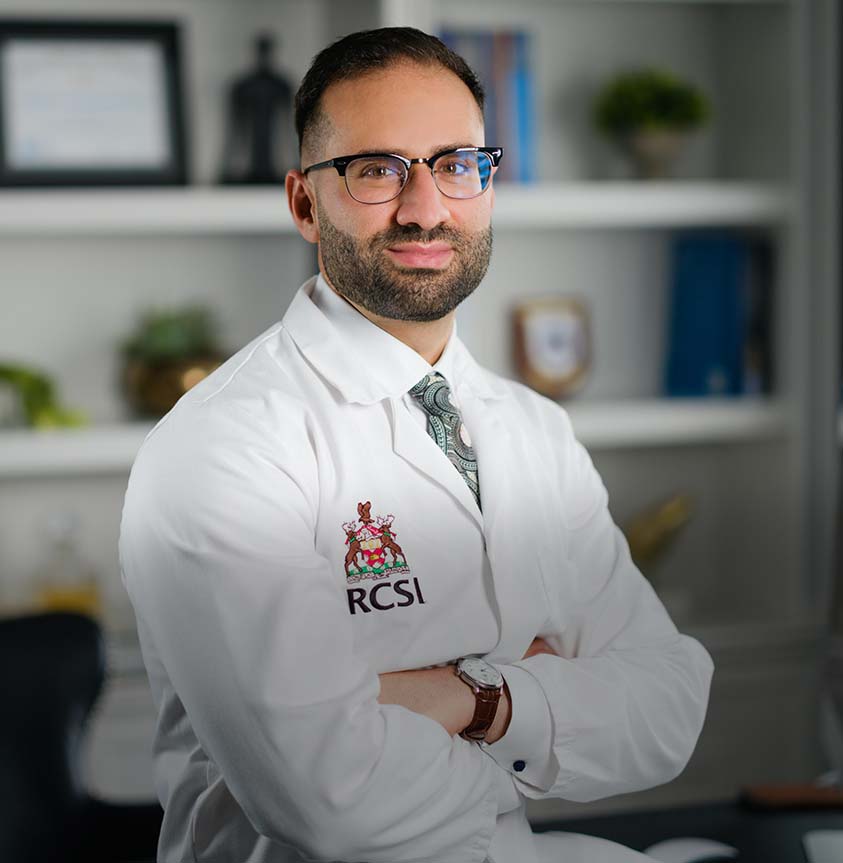
I recommend and prescribe orthodontic treatments to my patients as if they were my own family and I value meaningful relationships based on communication, confidence and trust.

“We highly recommend Dr Erfan Sallom, he transformed our daughter's teeth and she’s extremely happy with her beautiful smile! We were looking for a Orthodontist...”

“I was very anxious about orthodontic treatment and as such delayed it for years. I had no need to be nervous with the expertise and...”
“I would really recommend anyone to Dr Erfan Salloum, my experience with Erfan was amazing. I had no issue he was very knowledgeable about his...”
“I have just finished my two year orthodontic treatment with Dr Erfan and I would highly recommend. He explained everything perfectly about the treatment plan...”