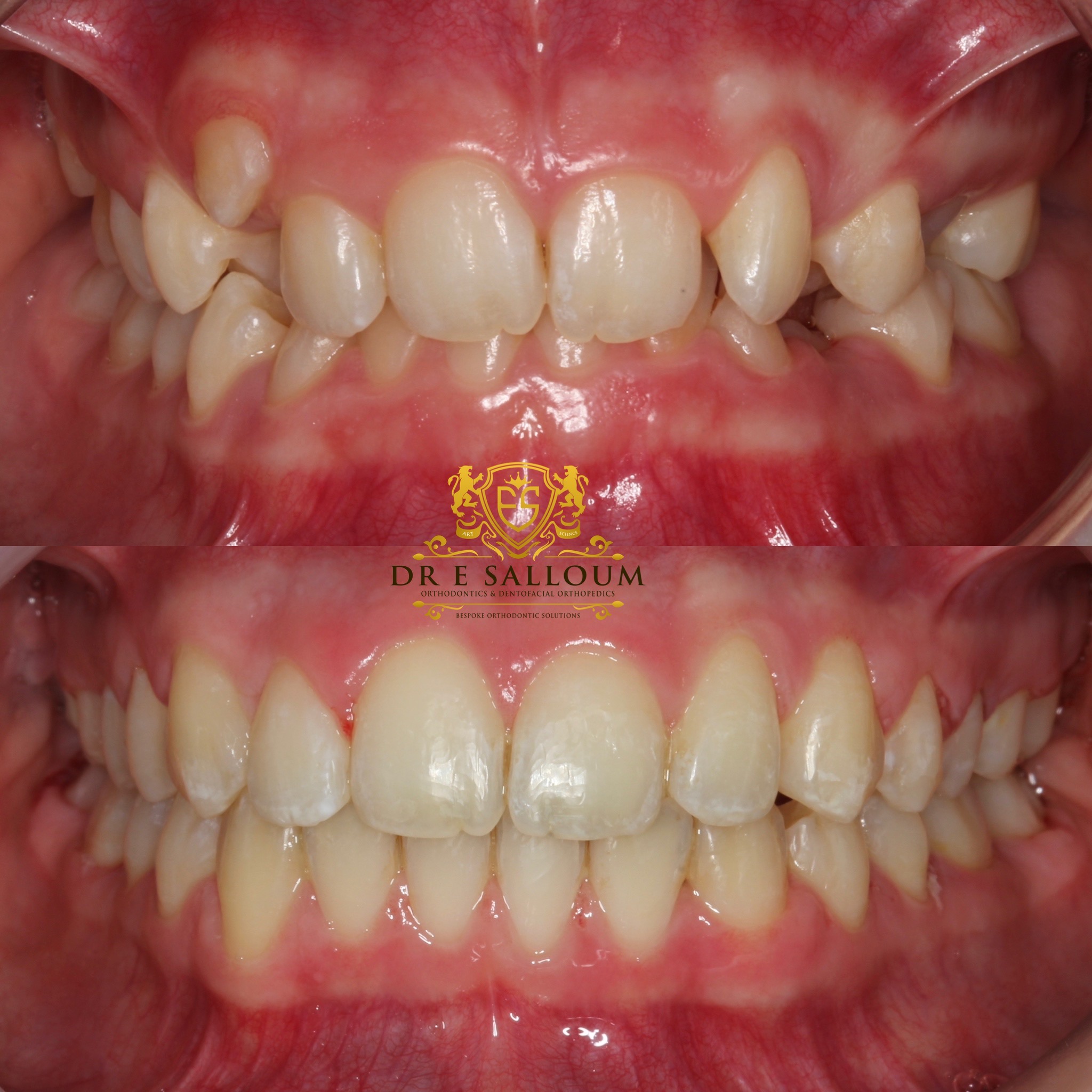
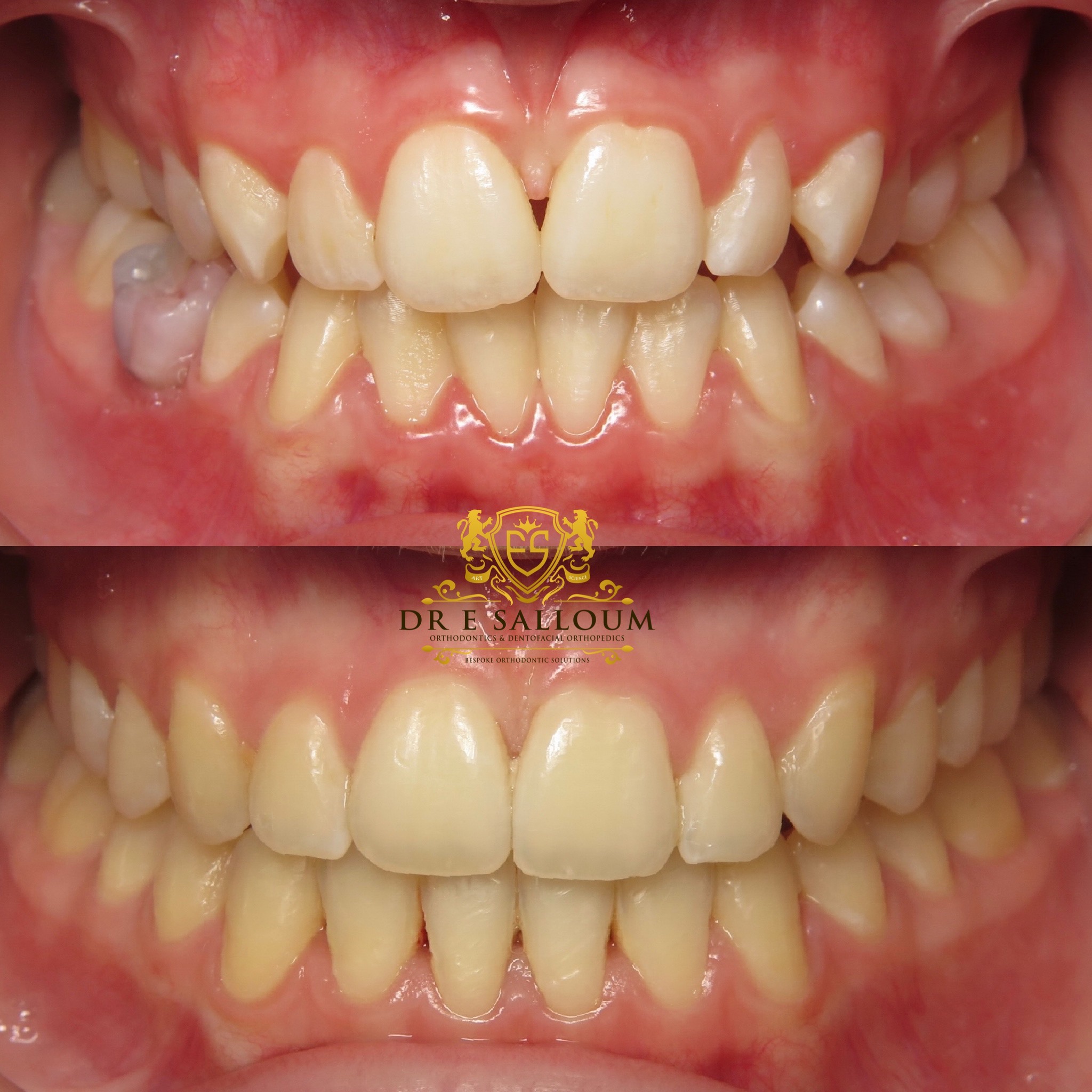
Some bite problems come from the teeth. Others come from the jaws. When the upper jaw, the lower jaw, or both are too far forward, too far back, too long, too short or off to one side, moving teeth alone cannot fully correct the problem. In these cases, corrective jaw surgery, also called orthognathic surgery, repositions the jaws themselves.
Jaw surgery is always a combined treatment. A maxillofacial surgeon moves the jaws. As your specialist orthodontist, I prepare the teeth before surgery and finish the bite after it. The quality of the result depends on how well these two parts are planned together.
Click here to see the British Orthodontic Society (BOS) patient information on Jaw Surgery.
Patients come to jaw surgery for different reasons, and often for more than one.
Single jaw surgery moves one jaw. A Le Fort I osteotomy repositions the upper jaw (maxilla). A bilateral sagittal split osteotomy (BSSO) repositions the lower jaw (mandible). A genioplasty, which moves the chin, can be added to either.
Double jaw surgery (bimaxillary surgery) moves both jaws in the same operation. Most of the jaw corrections I plan today are double jaw surgery with occlusal plane rotation.
The occlusal plane is the angle at which your teeth meet, seen from the side. Rotating it lets the surgeon do more than move the jaws forward or back. It changes the vertical proportions of the face and how far the chin and lips project. For example, rotating the jaws counter-clockwise can bring a retruding chin forward and shorten a long lower face, often with a greater improvement in the profile than a simple forward movement.
The jaws can be moved in all three dimensions:
Every movement is planned in advance on a 3D CBCT scan and a digital simulation, so the surgeon, you and I can see the intended result before treatment begins.
The deciding factor is dental compensation. When the jaws are out of position, the teeth usually tilt over the years to try to meet each other. This disguises the true size of the jaw problem.
Surgery first. In a small number of carefully selected cases, the teeth show little or no compensation. They are not hiding the skeletal problem, and the surgeon can move the jaws into a stable position straight away. Surgery is done first, and orthodontic treatment follows to fine-tune the bite, improve how the teeth settle and lock together. The main benefit is that the facial change comes at the start of treatment.
Orthodontics first. For most patients, the teeth need preparing before surgery. This usually takes between 6 and 24 months, depending on how much compensation is present.
Decompensation. I move the teeth back to their natural position over the jawbone. This exposes the real skeletal discrepancy, so the surgeon can correct it fully. Your bite and profile will often look worse before surgery. This is expected, and it is what allows the best result.
Extractions, in some cases. Creating the right tooth positions sometimes needs space. Take a patient with a significantly recessed lower jaw. The lower front teeth have often tipped forward to compensate. To allow the surgeon to bring the lower jaw as far forward as the face needs, I may need to move the lower front teeth back. That requires space, so lower teeth may be extracted. The bite looks worse before surgery, but the surgeon gains the room to make a bigger and better forward movement.
Palatal expansion, in some cases. Many jaw surgery patients also have a narrow upper jaw. I usually widen it with miniscrew-assisted rapid palatal expansion (MARPE), which anchors the expander to the bone. In many adults this is achieved completely without surgery. In selected cases, particularly older male patients, the midpalatal suture is too resistant, and a small surgical procedure is needed to facilitate the expansion. The right approach is decided from a CBCT scan of the suture.
Jaw surgery is not right for everyone. It is usually postponed or avoided when:
Smoking also increases the risk of poor healing and should be stopped well before surgery.
Jaw surgery is well established and most patients recover well, but every operation carries risks. Your surgeon will discuss these in detail. The most common are:
Most patients stay in hospital for one or two nights. Swelling peaks in the first few days and most of it settles within two to three weeks, though some residual swelling lasts for months. A soft diet is needed while the bone heals, usually for around six weeks. Most patients return to their normal routine within two to four weeks. The final facial result continues to emerge over six to twelve months as the last swelling resolves.
The practical side of recovery, including time off, diet planning and costs, is covered in detail on the Lusk Orthodontics blog.
Many patients assume jaw surgery means a long period in visible metal braces. It does not have to. I am comfortable delivering both the pre-surgical and post-surgical orthodontics with a range of appliances:
The choice depends on the tooth movements your case needs and on what suits your work and lifestyle. Being able to offer every option, including fully hidden treatment, means you do not have to compromise your appearance during a treatment that can take two years or more.
As a board-certified specialist orthodontist (EBO and EBAO Diplomate) with an Active Membership of the European and World Societies of Lingual Orthodontics, I plan each surgical case in detail and adapt the appliance to the patient, not the other way round.
If you are considering jaw surgery, or you have been told you may need it, the first step is a detailed consultation with me at Lusk Orthodontics. I will assess your bite, jaws, face and airway, take the records needed, and explain whether surgery is the right option or whether your case can be treated with orthodontics alone.
If we decide together that surgery will give you the better result, I will liaise with the maxillofacial or plastic surgeon. I work with excellent maxillofacial surgeons in Ireland and overseas, and I am happy to make a recommendation during your consultation.

“We highly recommend Dr Erfan Sallom, he transformed our daughter's teeth and she’s extremely happy with her beautiful smile! We were looking for a Orthodontist...”

“I was very anxious about orthodontic treatment and as such delayed it for years. I had no need to be nervous with the expertise and...”
“I would really recommend anyone to Dr Erfan Salloum, my experience with Erfan was amazing. I had no issue he was very knowledgeable about his...”
“I have just finished my two year orthodontic treatment with Dr Erfan and I would highly recommend. He explained everything perfectly about the treatment plan...”