Written by Dr Erfan Salloum, European Board-Certified Specialist Orthodontist
Published: 21 September 2026
Yes, up to a point. In growing children, we can influence how the jaws develop by treating obstacles to healthy growth and, in selected cases, by using orthodontic appliances. In adults, the growth window has closed, and meaningful skeletal change requires bone-anchored appliances or surgery. No technique lets us choose a jaw size.
This is one of the questions patients ask me most often. It deserves a fuller answer than yes or no. Click here to watch.
Two forces shape how the jaws develop: the genes we inherit and the environment we grow up in.
Some clinicians emphasise the environment. How we breathe, where the tongue rests at night, oral habits, and what functional appliances can achieve. Others emphasise genetics, and the hard limits of what treatment can change.
Both groups speak with confidence. Patients hear those confident opposites and understandably end up confused.
Having studied both approaches, my position is straightforward. Both matter. What varies is how much each one matters for a particular child.
Genes largely decide how tall a child can become. Poor nutrition or significant illness can stop that child reaching their potential. Treat those problems and the child can catch up.
But give a healthy, well-nourished child extra food and extra sleep, and they will not simply keep getting taller.
That is the principle worth holding onto. Removing obstacles helps a child reach their potential. It does not raise the ceiling.
Jaw development follows a similar logic, though the biology is considerably more complex. The upper jaw grows at sutures. The lower jaw grows at the condyles and remodels along its surfaces. Both respond to function, but within a genetically framed range.
The first job is to give the child the best conditions to grow.
Investigate persistent mouth breathing. A child who cannot breathe comfortably through the nose may adopt a low tongue posture and an open mouth for years. Enlarged adenoids and tonsils, allergic rhinitis and a narrow nasal airway all warrant assessment. This usually means working with an ENT surgeon or paediatrician rather than an orthodontist alone.
Take sleep concerns seriously. Habitual snoring, restless sleep, witnessed pauses in breathing, persistent bedwetting and daytime behavioural difficulties should never be dismissed as a phase. Paediatric sleep-disordered breathing is treatable, and the reasons to treat it go far beyond the face.
Manage habits that affect the bite. Prolonged thumb sucking and prolonged dummy use can alter the position of the teeth and the shape of the upper arch. The earlier these stop, the more the bite can recover on its own.
None of this is cosmetic. It is basic child health that happens to sit alongside facial growth.
Click here for more inflation about airway focused orthodontics.
In selected growing children, we can go further than removing obstacles.
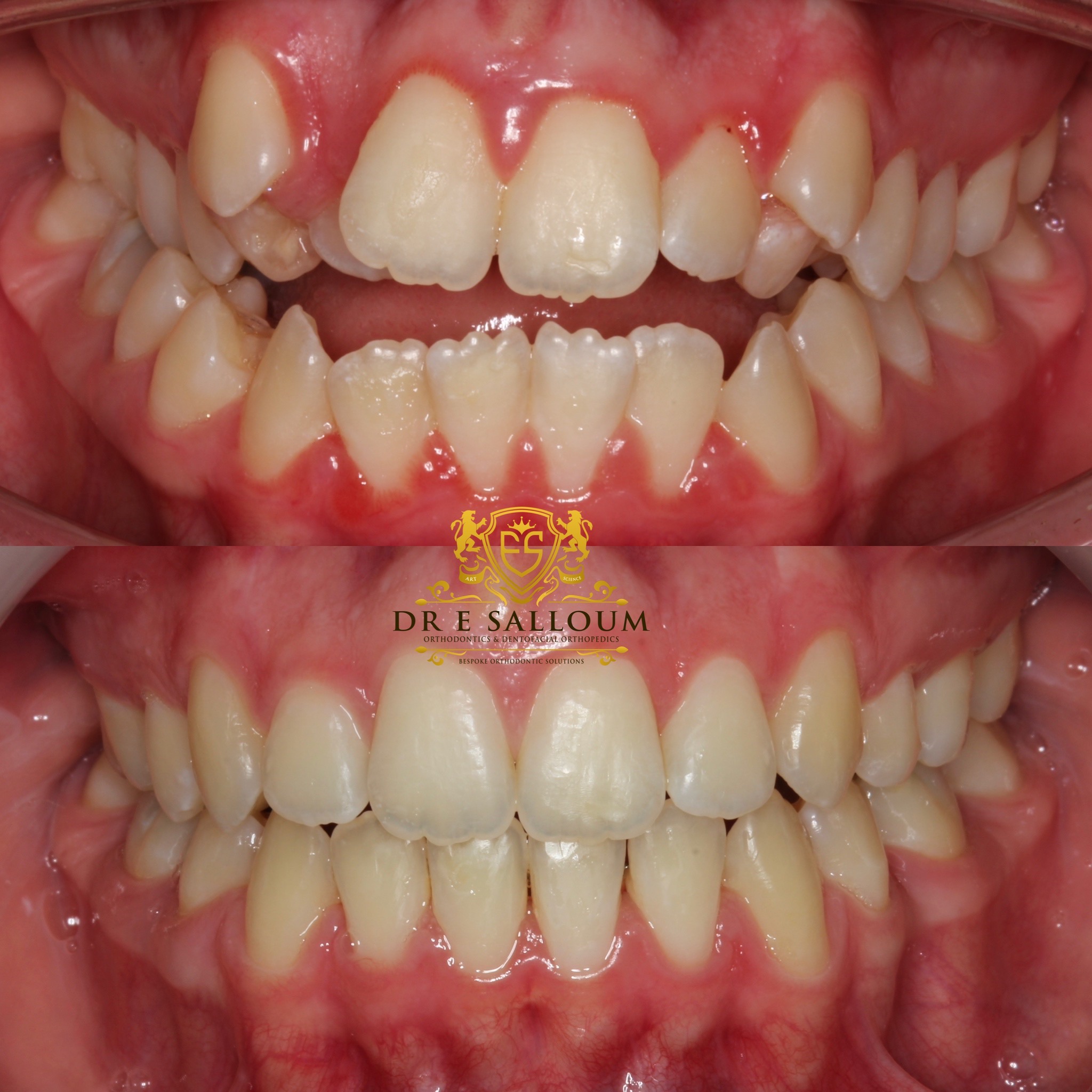
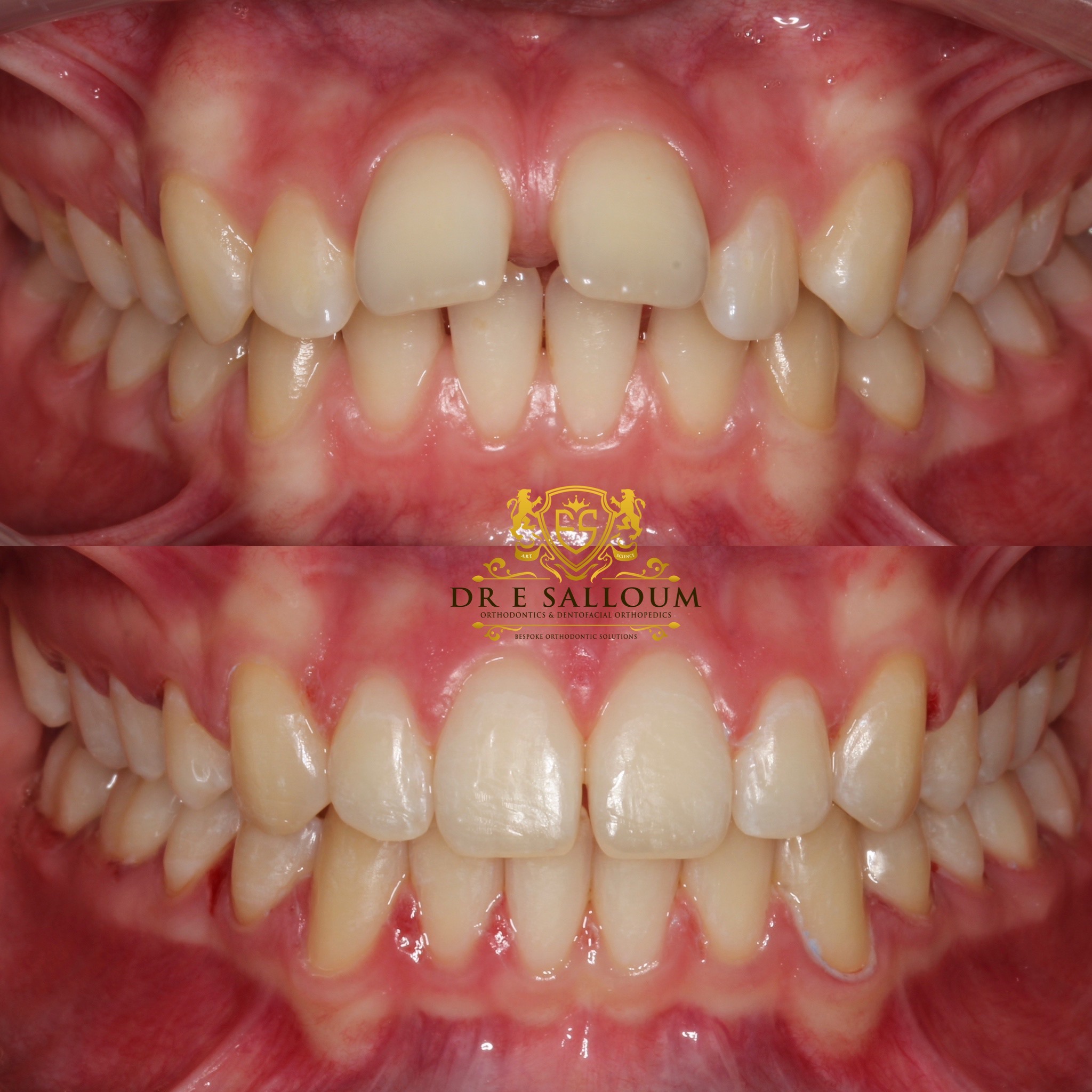
Widening a narrow upper jaw. While the midpalatal suture is still open, a rapid maxillary expander separates it and produces genuine skeletal widening, not just tipping of the teeth. This is one of the clearest examples of an orthodontist changing jaw dimension rather than tooth position.
Guiding the lower jaw. Functional appliances can influence the position and growth of the mandible in a child with a retrusive lower jaw, when used at the right stage of skeletal maturity. The evidence here supports a real but modest average effect, with wide variation between individuals. Long-term studies show much of the early benefit is dental and positional rather than a permanent change in jaw size.
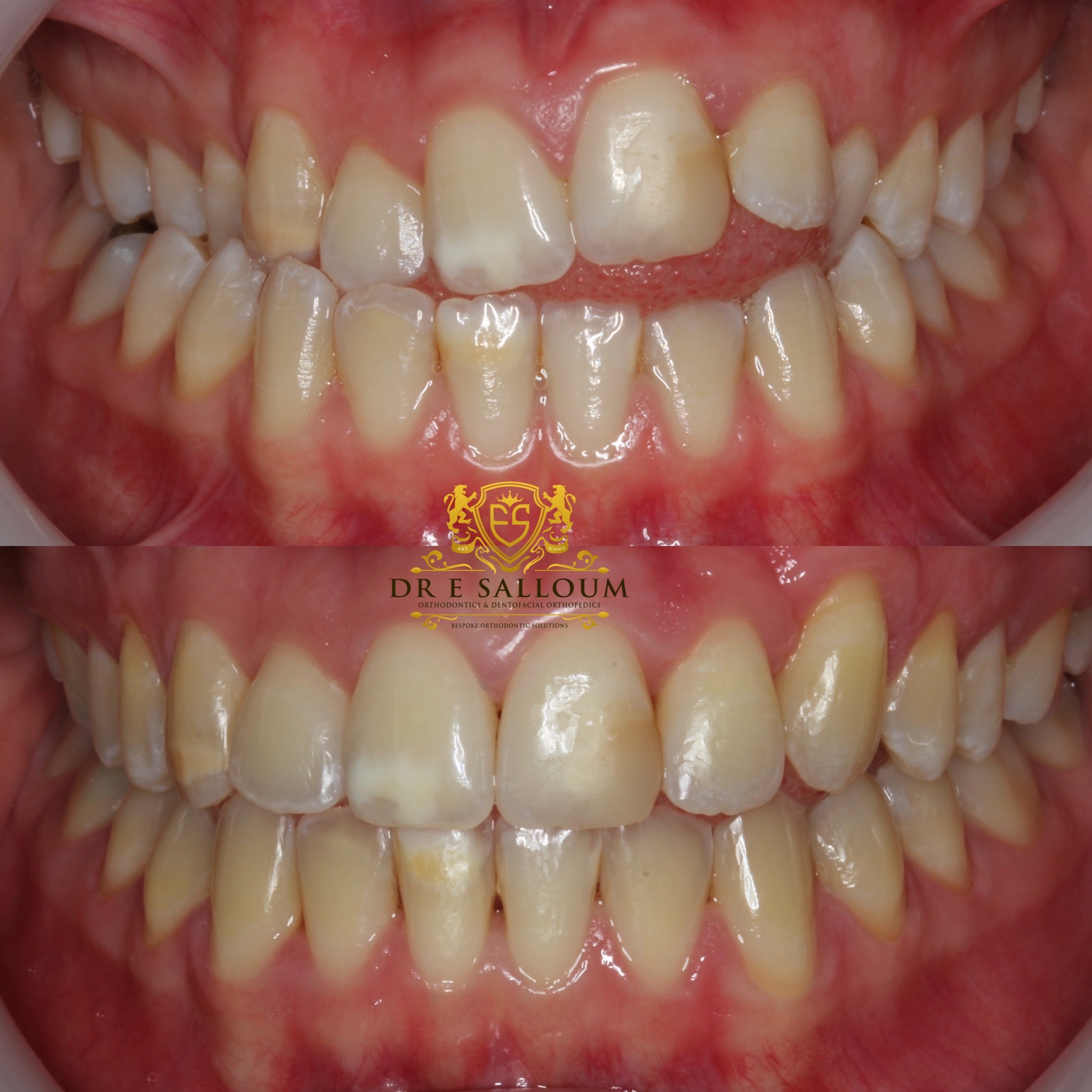
Creating space and intercepting problems. Managing crowding, crossbites and impacted teeth early can prevent larger problems later.
How much we achieve depends on three things: the child, the specific problem, and the timing. Timing is often the variable people underestimate. Miss the growth window and the same appliance does far less.
Click here where to know more when to bring your child for an assessment.
In adults, the sutures of the upper jaw have fused and facial growth has finished. Gentle, sustained soft tissue pressure does not remodel fused bone.
That does not leave adults without options. It changes which options are real.
MARPE (miniscrew-assisted rapid palatal expansion) uses bone-anchored miniscrews to deliver force directly to the skeleton. It can open the midpalatal suture in many young adults, and it does so because of the anchorage and the force, not because of posture.
Orthognathic surgery remains the definitive route where the skeletal discrepancy is significant.
Orthodontics alone can produce excellent dental and aesthetic outcomes by moving teeth within the existing skeleton.
Click here to learn more about palatal expansion in adults.
Mewing refers to holding the tongue against the palate in the hope of reshaping the jaw and defining the jawline. It has an enormous social media following and very little supporting research.
Here is a fair summary.
The underlying idea is not absurd. Oral function, tongue posture and nasal breathing do influence craniofacial development in children. That relationship is well described in the orthodontic literature.
The claims made for it are not supported. There are no controlled trials showing that tongue posture alone produces measurable skeletal change. The evidence offered publicly consists of anecdotes and before-and-after photographs, which differ in lighting, angle, weight and posture. Professional bodies including the British Orthodontic Society and the American Association of Orthodontists have stated that there is no clinical evidence that the technique changes facial structure.
In adults the biological problem is decisive. The suture is fused. Tongue pressure does not reopen it.
Some benefits are real but often mislabelled. Nasal breathing, a lips-together resting posture and correct swallowing are worth having. Supervised orofacial myofunctional therapy has a legitimate role, particularly alongside airway treatment. Calling that a jaw-growing technique overstates what it does.
My concern is not that people are trying to breathe better through their nose. My concern is young people spending years pursuing a facial outcome that was never achievable, while a treatable airway problem goes unassessed.
I would rather give a patient an accurate ceiling than an appealing promise.
For a child, that means a proper assessment of the airway, the sleep history, the habits and the skeletal pattern, then an honest conversation about what treatment can realistically change and when.
For an adult, it means being clear about which changes need appliances, which need surgery, and which are simply not available.
Support healthy development. Treat the problems we identify. Be realistic about what we can achieve.
Can you grow your jaw as an adult?
Not through posture or exercises. Once the facial sutures fuse and growth finishes, skeletal change requires bone-anchored expansion such as MARPE, or orthognathic surgery.
At what age can jaw growth still be influenced?
The most productive window is during active growth, broadly late childhood through adolescence, with the exact timing depending on skeletal maturity rather than chronological age alone. Upper jaw expansion becomes progressively harder as the midpalatal suture ossifies through the late teens and early twenties.
Does mouth breathing change the shape of the face?
Chronic mouth breathing is associated with a longer facial pattern, a narrower upper jaw and an altered tongue position. The association is well documented. The honest caveat is that the direction of cause is difficult to prove, which is exactly why persistent mouth breathing deserves investigation rather than assumption.
Is palatal expansion the same as mewing?
No. Expansion applies a substantial, controlled force across the suture through an appliance. Mewing applies light muscular pressure. The mechanics are not comparable.
When should I bring my child for an assessment?
Around age seven is the usual recommendation, because the first adult teeth and jaw relationships are visible by then. Bring them sooner if they snore, breathe through the mouth persistently, sleep poorly or have a crossbite.

I recommend and prescribe orthodontic treatments to my patients as if they were my own family and I value meaningful relationships based on communication, confidence and trust.

“We highly recommend Dr Erfan Sallom, he transformed our daughter's teeth and she’s extremely happy with her beautiful smile! We were looking for a Orthodontist...”

“I was very anxious about orthodontic treatment and as such delayed it for years. I had no need to be nervous with the expertise and...”
“I would really recommend anyone to Dr Erfan Salloum, my experience with Erfan was amazing. I had no issue he was very knowledgeable about his...”
“I have just finished my two year orthodontic treatment with Dr Erfan and I would highly recommend. He explained everything perfectly about the treatment plan...”