By Dr Erfan Salloum, Specialist Orthodontist
BDS, MFD RCSI, MFFDS RCPSG, DClinDent (Orth), MOrth RCSEd, MOrth RCSEng, FFD (Orth) RCSI, FDS RCSEng, FDS RCPSG. Diplomate of the European Board of Orthodontics (EBO) and European Board of Aligner Orthodontists (EBAO), British Orthodontic Society Maurice Berman Prize Winner 2026
“My front teeth stick out.” It is one of the most common things I hear in clinic. Some people see it in photos. Others feel their top teeth resting on their lower lip. Almost everyone calls it an overbite.
In orthodontics, this is usually part of what we call a Class 2 malocclusion, or Class 2 bite. There are two main types: Division 1 and Division 2. Here is what each one means, what causes it, and how I approach treatment.
When front teeth stick out, the correct term is an overjet. Overjet measures how far forward the upper front teeth sit in front of the lower front teeth. It describes the front-to-back relationship between the teeth, and often between the upper and lower jaws too.
Overbite is something different. It measures the up-and-down overlap of the front teeth.
A Class 2 Division 1 bite has an increased overjet. It often comes with a deep overbite as well, but not always.
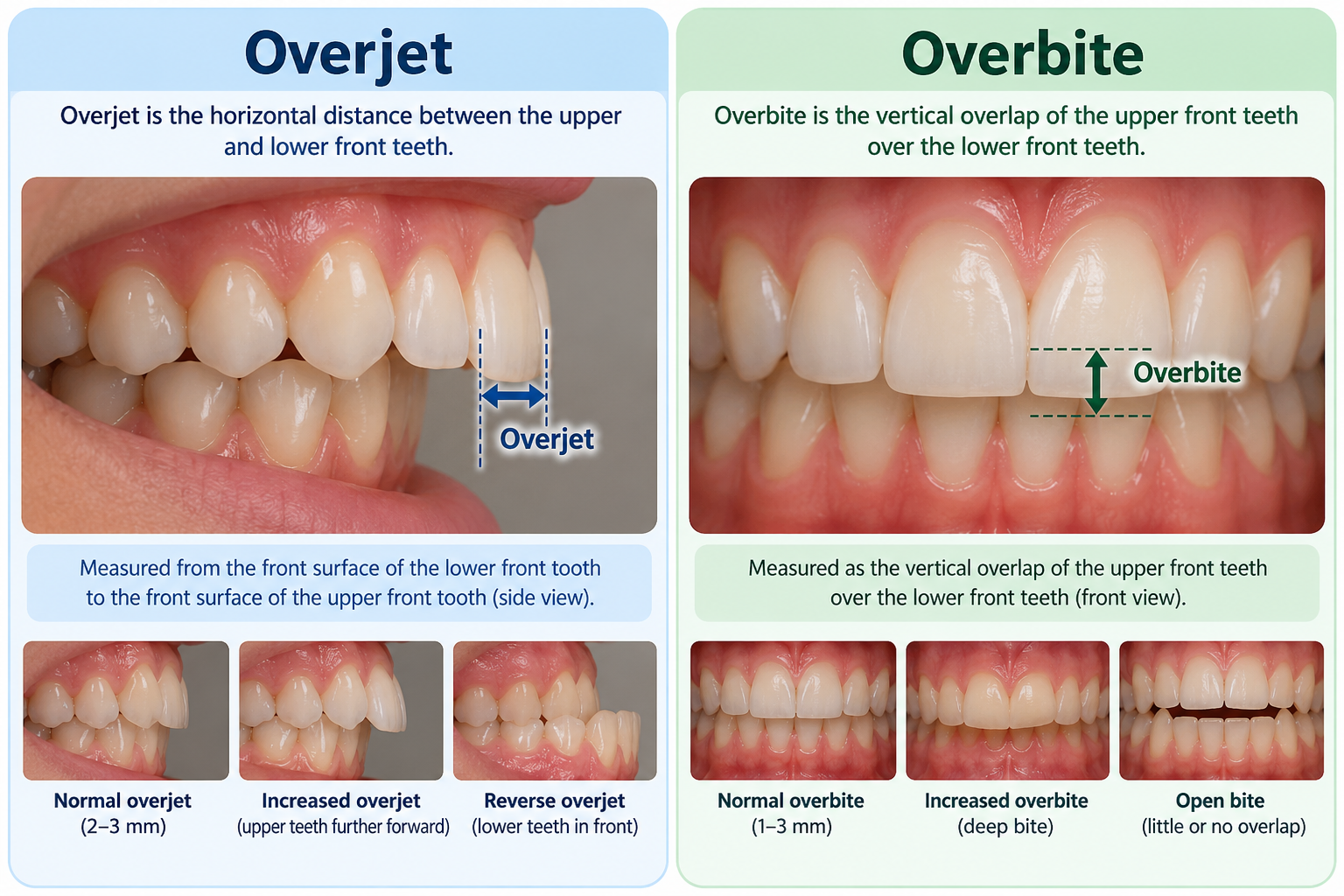
An increased overjet has one of three causes.
In Class 2 bites, the upper jaw being too far forward is rare. In practice, when the jaws are the problem, it is almost always the lower jaw sitting too far back.
Patients often ask which brace or appliance they need. That is the wrong starting point.
The most important part of any treatment plan is finding the cause. Is it the jaws, the teeth, or both? If it is the jaws, is it the upper, the lower, or both? Only once we know the cause can we choose the right treatment. Two people with the same-looking overjet can need completely different approaches.
The first question is age. Can we still influence how the lower jaw grows?
The size and position of the lower jaw is largely set by your genes. In growing children and teenagers, we can influence it to a degree. We do this with a functional appliance, which holds the lower jaw in a forward position. Over time, this helps the jaw express its natural growth potential and supports the corrected bite.
There are many functional appliances, and they all work in a similar way:
I prefer fixed functional appliances because they do not depend on the patient remembering to wear them. That said, the choice depends on the orthodontist and the patient.
A word of caution. No appliance can grow a jaw beyond its genetic potential. You may see claims online about appliances that grow the lower jaw and give you a chiselled jawline. These claims are not accurate.
For adults who have stopped growing, or for very severe cases, braces alone may not be enough. Here we consider jaw surgery (mandibular advancement) to bring the lower jaw forward, combined with orthodontic treatment.
Jaws do not only grow forward. They also grow downward. In some people, the lower jaw grows more downward and backward than forward. We call this a clockwise rotation pattern, and it tends to give a longer face.
This matters for treatment. Some of the methods used to correct a Class 2 bite can rotate the lower jaw further in this direction and make the face look even longer. So the mechanics and the type of appliance should be tailored to each patient’s vertical growth pattern, not just to the bite.
In adults who have stopped growing, braces can do very little to change the growth pattern. It is largely set by genetics and other factors. In these cases, the best option is sometimes double jaw surgery, which rotates the bite and jaws into a better position as part of the Class 2 correction.
If the upper front teeth are tipped forward and gappy, the fix can be simple. We tip them back to a normal angle and close the gaps between them. In many cases, that alone corrects the overjet.
If the overjet is severe, or the teeth have no gaps, we need to make room before the front teeth can move back. There are two main ways to do this:
Sometimes tipping the upper teeth back is not enough on its own. In these cases, we combine a modest retraction of the upper front teeth with bringing the lower jaw or lower teeth forward.
There is a lot of discussion online about this. Here is what the research actually shows.
Some studies found that pulling the upper front teeth back a long way, while keeping the back teeth from moving forward, can sometimes reduce the size of the airway at the back of the throat. Other studies found no reduction at all, even with the same type of treatment. So the science is not settled.
In my practice, I never pull the upper front teeth back beyond their normal angle. If they are tipped too far forward, I bring them back to a normal position and stop there. I have two reasons:
It is also worth knowing that, in most cases, the teeth would have to be pulled back well past normal before the tongue or airway could plausibly be affected.
Some appliances, such as headgear, aim to hold back the forward growth of the upper jaw. I don’t use them, for two reasons.
First, a Class 2 bite is almost never caused by the upper jaw being too far forward. It is almost always the lower jaw sitting too far back. It makes more sense to encourage the lower jaw forward than to hold the upper jaw back.
Second, I am not comfortable with the idea of restricting the forward growth of the upper jaw. There is no research showing that headgear harms the airway. This is my own clinical view. But for airway health, I would rather support forward development than limit it.
Class 2 Division 2 is a variation of the same bite. The lower jaw still tends to sit too far back. But instead of sticking out, the upper front teeth tip backwards.
This usually comes with a very deep overbite. Often you cannot see the lower front teeth at all when the teeth are together. In some cases, the teeth bite into the gum and cause damage.
Treatment follows the same logic as Division 1. The first step is to bring the upper front teeth forward to a normal angle. This turns the Division 2 bite into a Division 1 bite. From there, we treat it exactly as described above, based on whether the cause is the jaws, the teeth, or both.
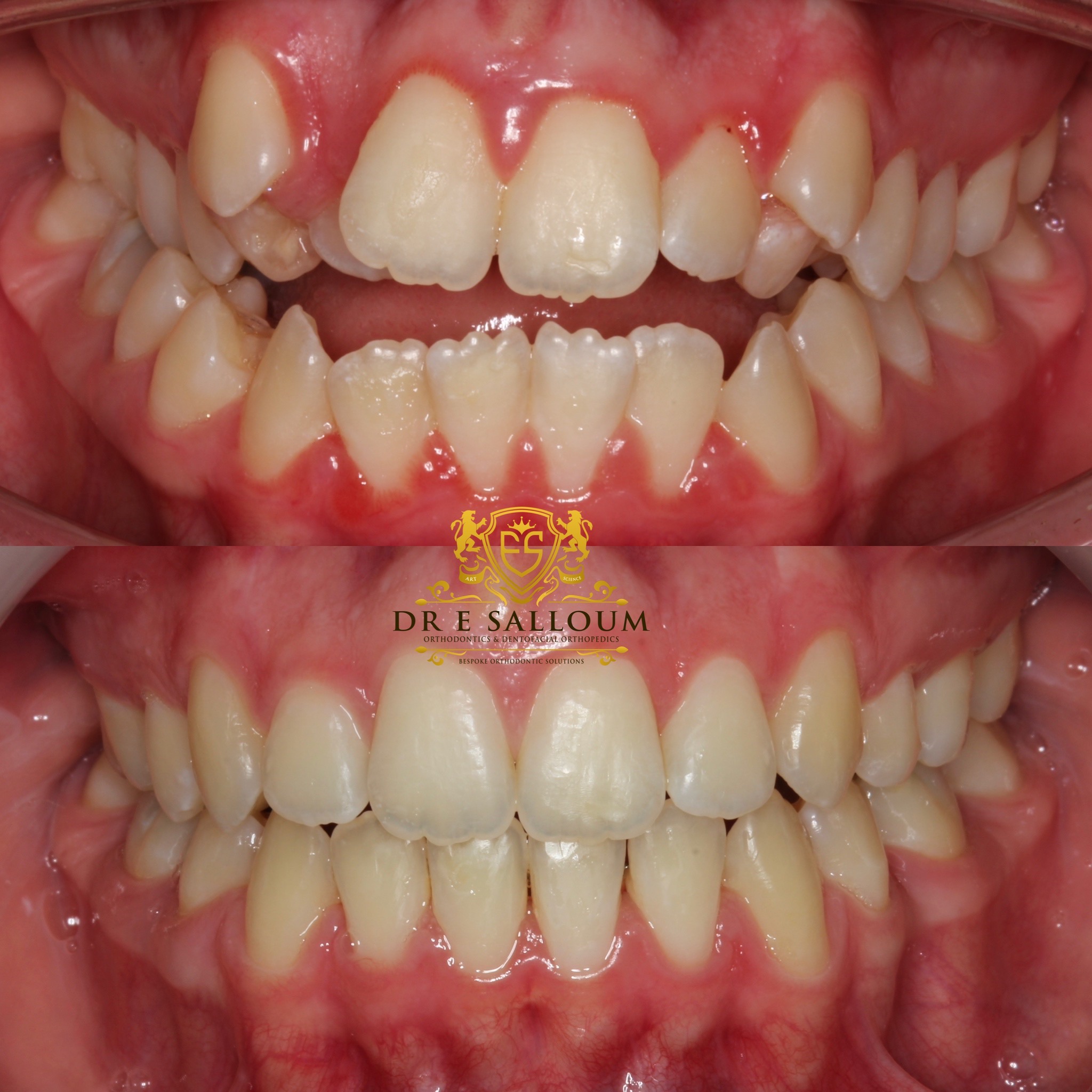
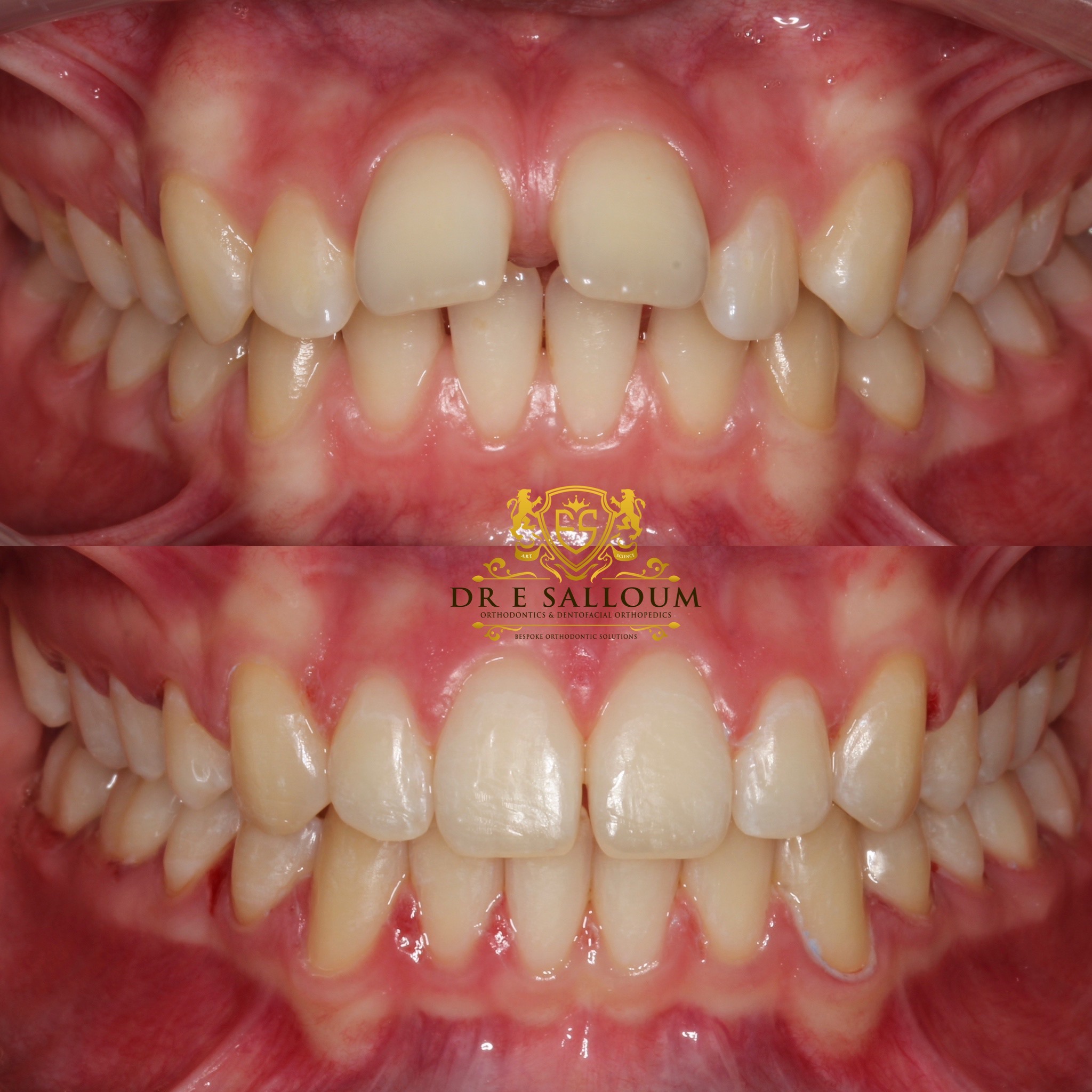
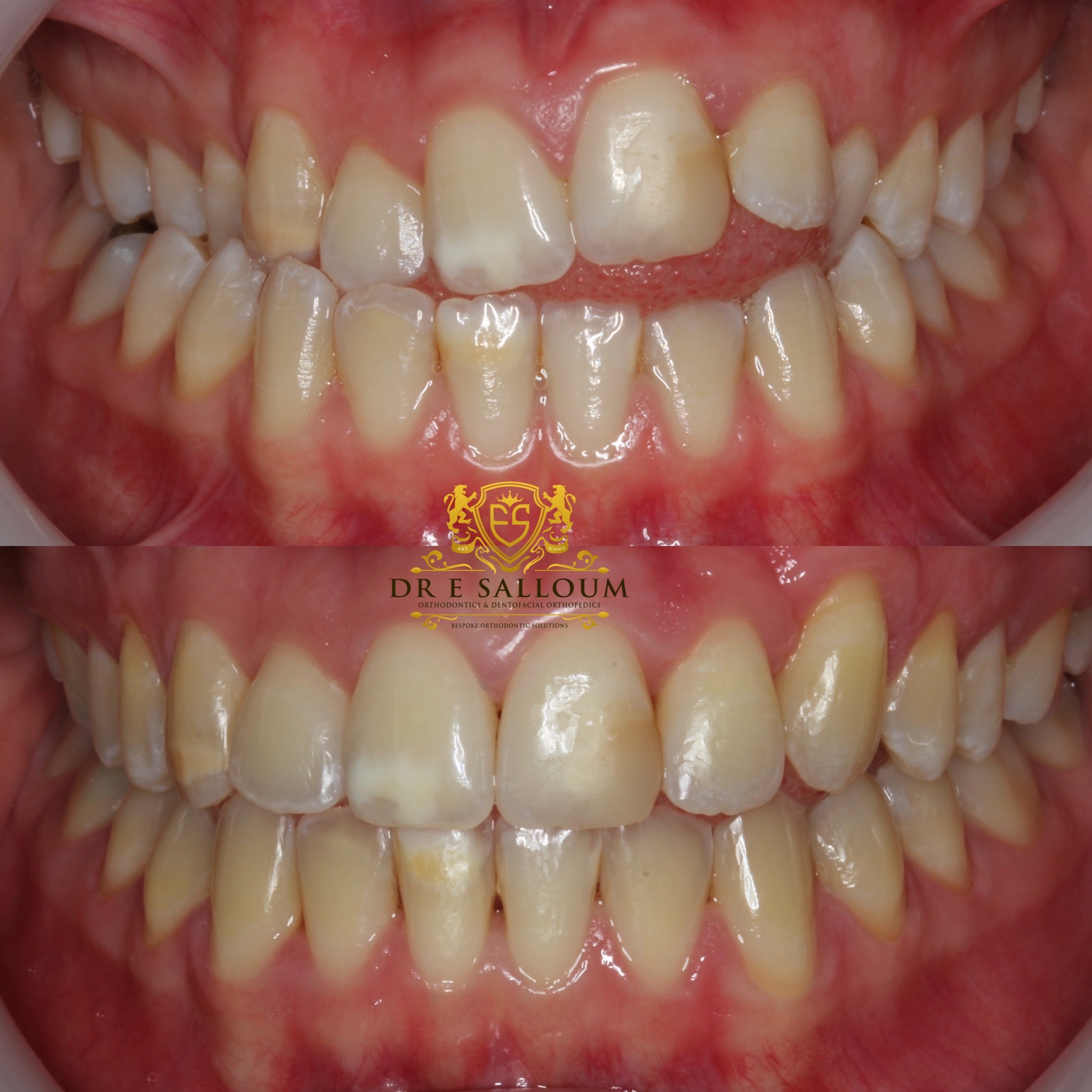
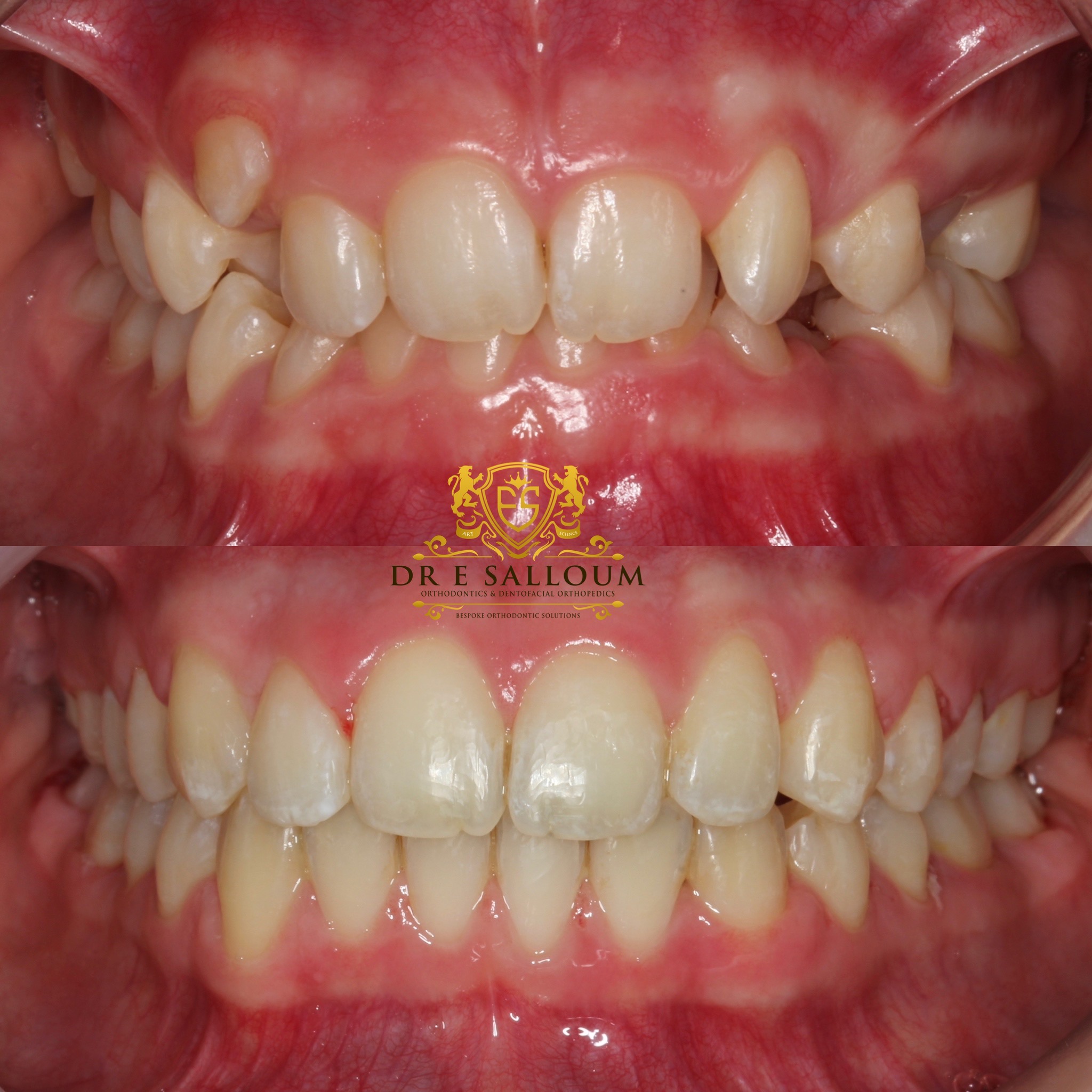
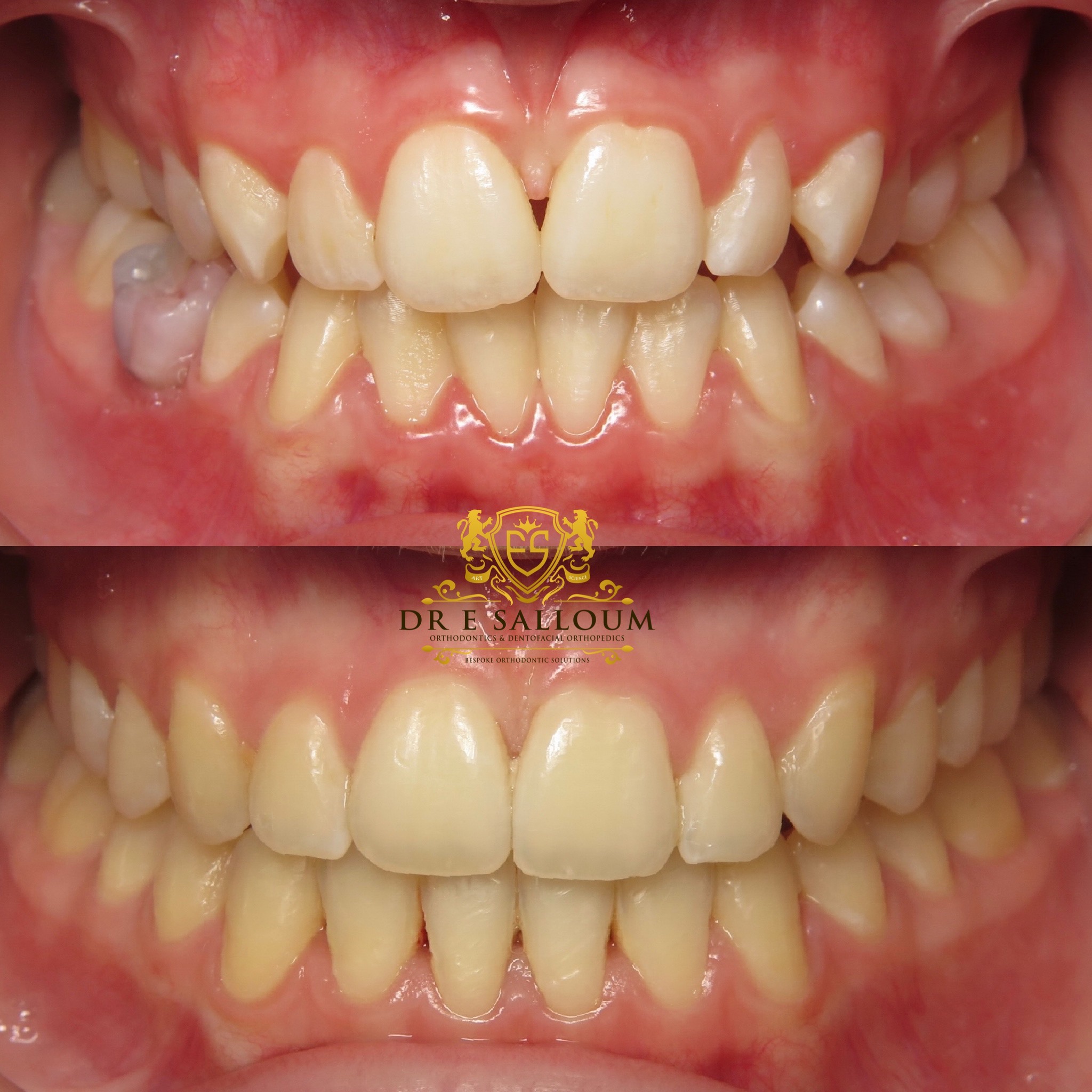
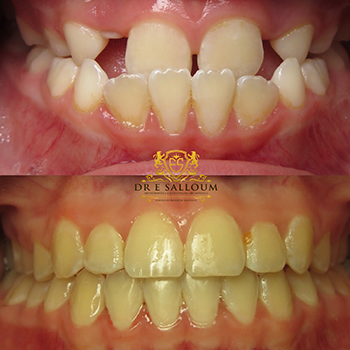
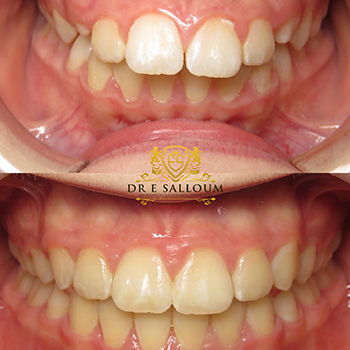
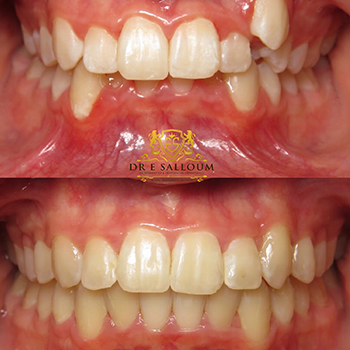
1- Growing teenage patient treated with removable functional appliance followed by fixed braces

2- Adult patient treated with invisible lingua braces combined by Herbst fixed functional appliance to advance the lower jaw and teeth forward

3- Adolescent patient with protruded and severely crowded teeth treated with four premolars extractions and fixed braces

4- Adult patient with class II division 2 converted to class I division 1 and treated invisible lingual braces followed by jaw surgery to advance the lower jaw
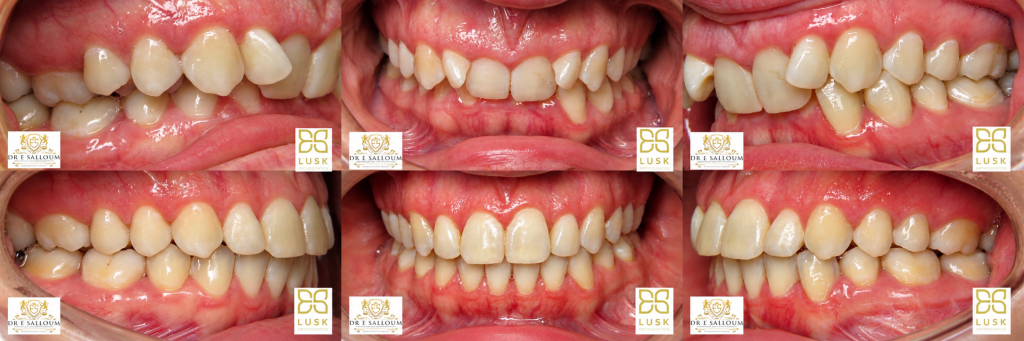
5- Young child in the primary mention stage treated early with palatal expansion, followed by clear aligners (Invisalign) and mandibular (lower jaw) advancing device

6- Adult patient treatment with invisible lingual braces and temporary anchorage devices (TADs) to reduce dental protrusion and close extraction spaces

7- Correcting protruding teeth during growth with a MARA fixed functional appliance and braces

Teeth that stick out are not all the same problem. The right treatment depends on the cause, your age, and how severe the bite is. A careful assessment comes before any decision about braces or appliances.
If you are concerned about your bite, or your child’s, book a consultation and we can work out what is causing it.
Back to Blog
I recommend and prescribe orthodontic treatments to my patients as if they were my own family and I value meaningful relationships based on communication, confidence and trust.

“We highly recommend Dr Erfan Sallom, he transformed our daughter's teeth and she’s extremely happy with her beautiful smile! We were looking for a Orthodontist...”

“I was very anxious about orthodontic treatment and as such delayed it for years. I had no need to be nervous with the expertise and...”
“I would really recommend anyone to Dr Erfan Salloum, my experience with Erfan was amazing. I had no issue he was very knowledgeable about his...”
“I have just finished my two year orthodontic treatment with Dr Erfan and I would highly recommend. He explained everything perfectly about the treatment plan...”