Updated July 2026
Orthodontists have debated dental extractions for decades. Some clinicians and appliance manufacturers promote non-extraction treatment as the only acceptable approach. They claim that removing teeth harms breathing, the temporomandibular joint (TMJ), or facial appearance. On the other side, some practitioners have historically over-relied on extractions when other approaches could have worked.
The truth is more nuanced. Advances in expansion techniques and biomechanics have changed how orthodontists approach crowding. Extractions are no longer a default option. They remain, however, sometimes genuinely necessary.
Click here to read this statement from the British Orthodontic Society on dental extractions.
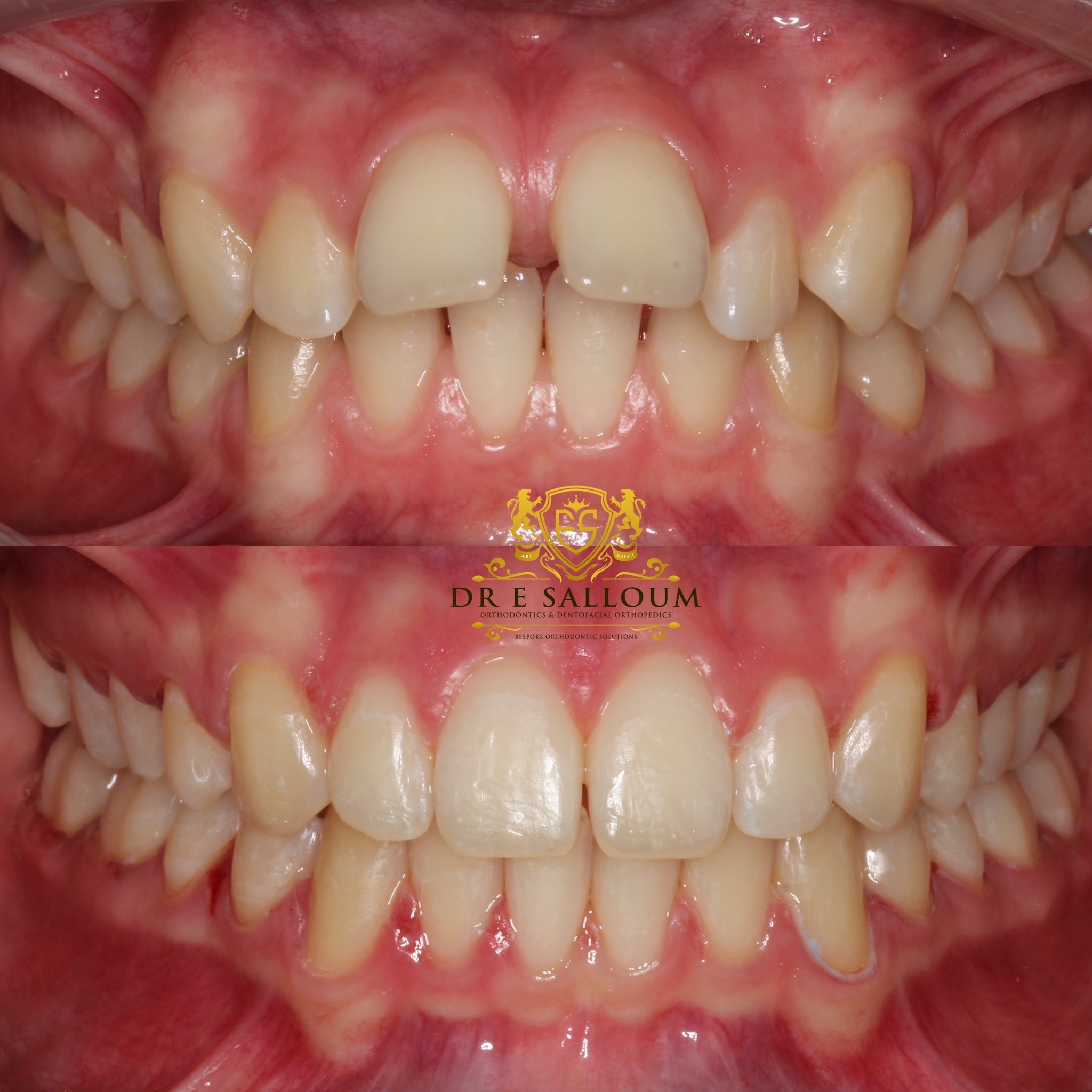
Modern expansion techniques have significantly reduced the need for extractions. Palatal expansion, arch development, and improved biomechanics allow orthodontists to resolve many crowding cases without removing teeth. This is a genuine clinical advancement, and expansion should be the first consideration in most cases, specially when the arches are genuionly narrow.
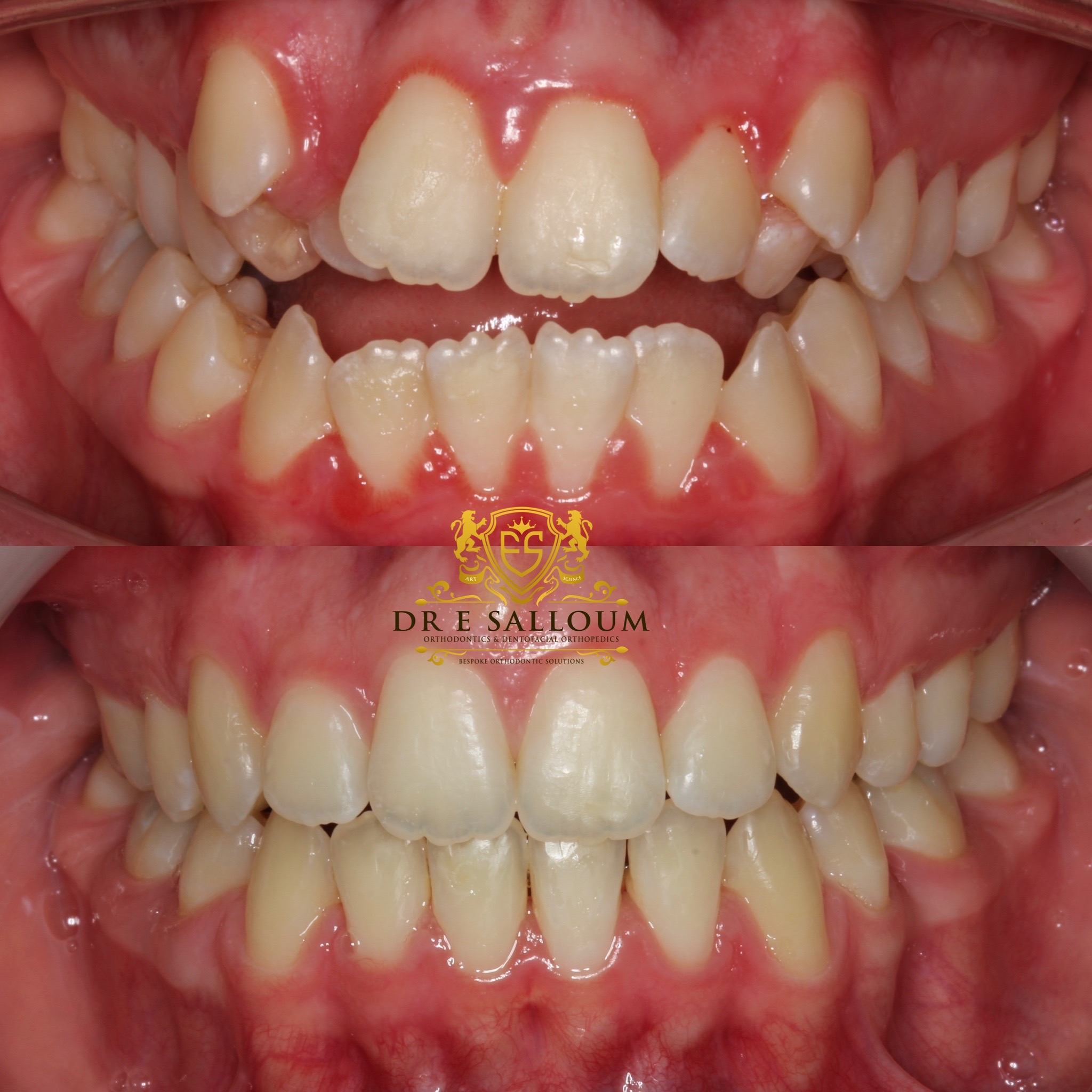
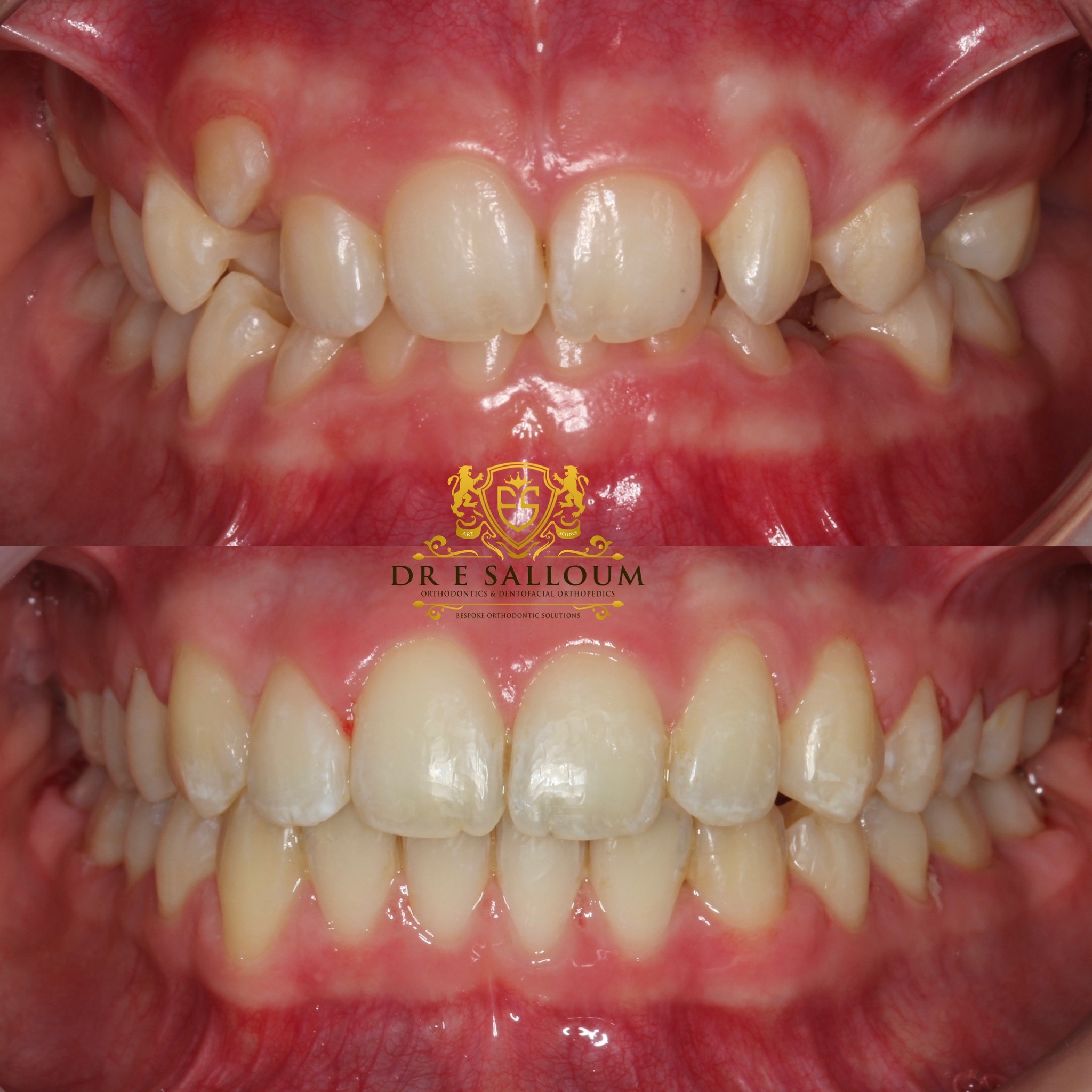
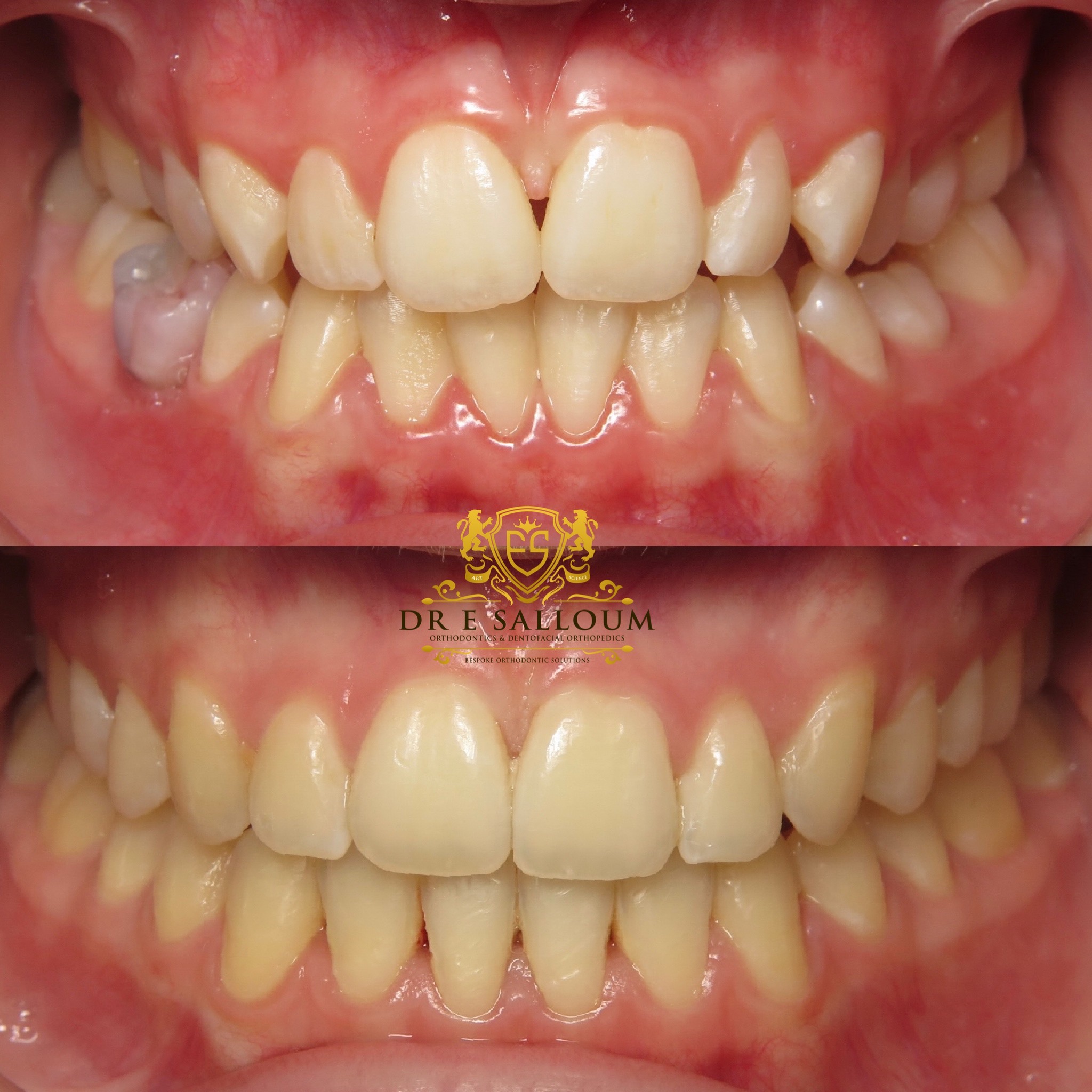
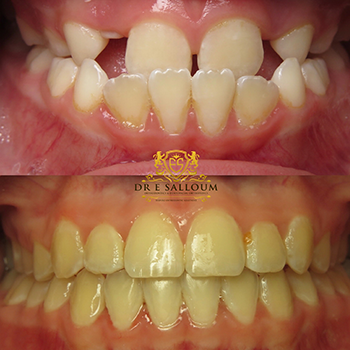
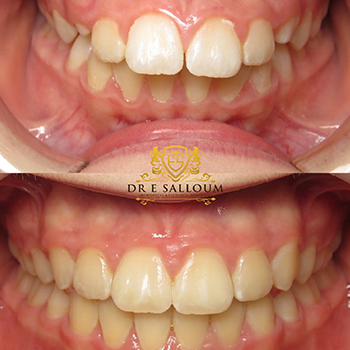
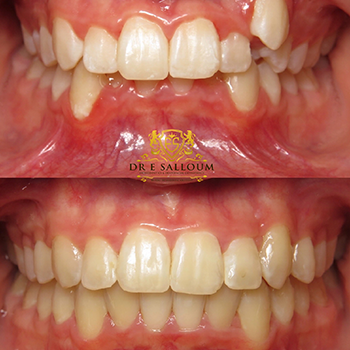
That said, very severe crowding sometimes leaves no adequate alternative. When teeth sit entirely outside the arch, there may not be enough room, even after expansion, to bring all teeth into the bone safely. In these cases, extractions do not constrict or retract the arches. With proper mechanics, the space simply allows blocked-out teeth to move into their correct positions. The arch form stays intact or improves.
It is also worth noting that severe crowding and a narrow palate often co-exist. Expansion should therefore address the skeletal narrowness, while the extraction manages the remaining space problem. The two approaches work together rather than in opposition.
Research has found no significant association between orthodontic extractions and long-term TMJ disorders. But even this framing deserves scrutiny: correlation does not equal causation. TMJ disorders are multifactorial. They develop due to a combination of genetics, parafunctional habits, stress, and joint anatomy, none of which extractions control. Attributing TMJ problems to a past extraction decision, without ruling out these other factors, is a logical error. Careful treatment planning with appropriate mechanics does not raise the risk of TMJ dysfunction.
This question comes up often, and it deserves a careful answer.
Extractions do not, by themselves, cause airway compromise or sleep apnea. Researchers at the American Journal of Orthodontics and Dentofacial Orthopedics found no evidence that extraction-based treatment reduces respiratory function or airway dimensions. People who develop obstructive sleep apnea later in life do so because of anatomical, physiological, and lifestyle factors. Removing teeth during adolescent orthodontic treatment does not trigger this. A person predisposed to sleep apnea will develop it whether or not they had extractions.
The more important question is: what caused the crowding in the first place?
Crowding often develops because of a narrow palate. If an orthodontist extracts teeth without identifying and treating this underlying skeletal issue, the root cause goes unaddressed. People with narrow palates carry anatomical risk factors for sleep-disordered breathing, high vaulted arches, reduced nasal airway volume, and altered tongue posture, regardless of whether they ever had extractions.
So when a patient who had extractions later develops sleep apnea, it is tempting to connect the two events. But correlation does not equal causation. The narrow palate, present before treatment began, is the far more likely contributing factor. The tooth removal itself is not the cause.
The correct approach is to identify the underlying cause first. When expansion addresses the skeletal narrowness, it also reduces the anatomical risk factors for sleep-disordered breathing. Any extractions that follow deal with the remaining space deficit. This sequence does not compromise the airway.
The legitimate concern is not extractions themselves. It is poor mechanics during extraction treatment. When an orthodontist closes extraction space by over-retracting the front teeth, the dental arches can narrow. This may alter tongue position and posture, and could have downstream consequences for the airway and facial appearance.
However, the clinical reality is important here. For extraction treatment to cause significant airway or functional problems, a clinician would need to retract the teeth to a very considerable degree and constrict the arches substantially. This level of over-retraction rarely occurs in competent clinical practice. The concern is real in principle. In practice, it should prompt careful planning and monitoring, not a blanket rejection of extractions as a treatment option.
Poor mechanics can harm a facial profile. Extractions alone do not. When a clinician selects the right cases, respects lip support and arch form, and avoids over-retraction, the facial profile stays balanced. In some cases, it improves. The outcome depends on the quality of the treatment plan, not simply on whether extractions occurred.
Some practitioners and manufacturers claim that extractions always cause harm and that every case can resolve without them. This is an oversimplification. It conflates the misuse of extractions with the concept of extractions itself.
The historical tendency to default to extractions without first exploring expansion was also an oversimplification, in the other direction. Accurate diagnosis, not rigid rules, should guide every decision.
No two patients are alike. The decision on whether to extract depends on the degree of crowding, palatal width, tooth positions, facial structure, and the realistic outcome of expansion. A skilled orthodontist first assesses whether expansion can resolve the problem. They proceed with expansion where it works. They consider extractions only where the remaining space deficit demands it.
The goal stays the same in every case: a healthy bite, a stable result, and a balanced, natural appearance, achieved through whatever approach best suits that individual patient.
Extractions are not inherently good or bad. Modern techniques have reduced how often orthodontists need them, but they remain necessary in some cases. Good mechanics and a thorough diagnosis, one that identifies and treats the underlying cause of crowding, determine the outcome, not the extraction decision alone. When orthodontists plan carefully and execute properly, extractions neither harm the airway nor compromise the face. The risks come from poor planning and poor mechanics. Avoiding those is what good orthodontic care is about.
If want to inquire about arch expansion vs tooth extractions, click here to inquire.
Back to Blog

I recommend and prescribe orthodontic treatments to my patients as if they were my own family and I value meaningful relationships based on communication, confidence and trust.

“We highly recommend Dr Erfan Sallom, he transformed our daughter's teeth and she’s extremely happy with her beautiful smile! We were looking for a Orthodontist...”

“I was very anxious about orthodontic treatment and as such delayed it for years. I had no need to be nervous with the expertise and...”
“I would really recommend anyone to Dr Erfan Salloum, my experience with Erfan was amazing. I had no issue he was very knowledgeable about his...”
“I have just finished my two year orthodontic treatment with Dr Erfan and I would highly recommend. He explained everything perfectly about the treatment plan...”