By Dr Erfan Salloum, Board Certified Specialist Orthodontist | EBO & EBAO Diplomate | British Orthodontic Society Maurice Berman Prize Winner 2026
Updated October 2026
Over the past few years, I have noticed a change in what patients ask about during orthodontic consultations.
Previously, many patients requested specific systems such as Invisalign or Damon braces. Today, more patients arrive asking for MARPE (Mini-Screw-Assisted Rapid Palatal Expansion).
Some have watched videos showing dramatic changes in jaw width. Others hope that MARPE will improve their breathing, create more tongue space, avoid dental extractions or even move their upper jaw forward.
Social media has helped raise awareness of adult palatal expansion. However, it has also created unrealistic expectations.
MARPE is an effective treatment for selected patients with a narrow upper jaw. It is not a universal solution for crowding, facial appearance, breathing problems or sleep apnoea.
At Lusk Orthodontics in North Dublin, we assess the underlying jaw problem before recommending expansion. Our approach focuses on accurate diagnosis, careful appliance selection and realistic treatment goals.
In this article, I explain how MARPE works, the differences between tooth-borne, hybrid and bone-borne expanders, when surgical assistance may help, and what current research tells us about breathing and forward movement of the upper jaw.
MARPE stands for Mini-Screw-Assisted Rapid Palatal Expansion.
It is an orthodontic technique that aims to widen the upper jaw, or maxilla, using an expander supported by orthodontic mini-screws.
The upper jaw consists of two halves joined by the midpalatal suture. During childhood, conventional palatal expanders can often widen the jaw through this suture.
As patients mature, the suture and surrounding facial bones become more resistant to expansion.
In older teenagers and adults, a conventional expander attached only to the teeth may cause more tooth tipping than true skeletal widening.
MARPE aims to overcome some of these limitations by transferring expansion forces more directly to the palatal bone.
When successful, MARPE can widen the upper jaw and help correct a genuine skeletal transverse deficiency.
We may consider MARPE for patients who have:
However, not every patient with crowding, a narrow smile or breathing concerns needs MARPE.
The first step is to establish whether the upper jaw is genuinely too narrow.
Not all palatal expanders work in the same way.
One of the most important differences is how the appliance transfers force to the upper jaw.
Traditional rapid palatal expanders, such as Hyrax-type appliances, attach to the upper teeth.
When we activate the expansion screw, the appliance transfers force through the teeth to the upper jaw.
In younger children, this can produce effective skeletal expansion because the midpalatal suture offers relatively little resistance.
However, in skeletally mature patients, the same forces may cause unwanted dental movements.
These can include outward tipping of the upper molars, bending of the surrounding alveolar bone and changes in the supporting periodontal tissues.
For this reason, conventional tooth-borne expansion is generally not our preferred approach for significant skeletal expansion in adults.
A hybrid MARPE combines dental anchorage with palatal mini-screws.
The appliance attaches to selected upper teeth while mini-screws provide additional support from the palatal bone.
This design distributes expansion forces between the teeth and the skeletal structures.
Hybrid expanders can work well in selected teenagers and adults. However, they may still produce dental tipping because part of the force passes through the teeth.
The amount of dental movement depends on the appliance design, skeletal maturity, activation protocol and individual anatomy.
A fully bone-borne expander relies on mini-screws anchored in the palatal bone rather than bands attached to the teeth.
The expansion screw connects directly to the skeletal anchorage system.
This design aims to reduce unwanted dental tipping and transfer more of the expansion force to the maxillary bone.
Fully bone-borne expansion can be particularly useful when we want to minimise dental side effects in adults.
However, bone-borne does not automatically mean risk-free or more successful in every patient.
Treatment still depends on the available palatal bone, mini-screw stability, surrounding skeletal resistance and the amount of expansion required.
Patients often encounter several names when researching adult palatal expansion.
These terms can be confusing because some describe general treatment methods, while others refer to particular appliance designs or surgical protocols.
MARPE is the general term for palatal expansion that uses orthodontic mini-screws to provide skeletal anchorage.
Different MARPE appliances may use different numbers of screws, anchorage positions and expansion mechanisms.
MSE refers to a specific type of skeletal expansion appliance that typically uses four palatal mini-screws.
Some designs aim to engage both the palatal and nasal cortical bone, known as bicortical anchorage.
This can improve the transfer of expansion forces to the skeletal structures.
However, MSE is not automatically suitable for every adult, and the use of a particular appliance does not guarantee successful separation of the midpalatal suture.
BARME describes an approach that uses bone anchorage to support maxillary expansion.
Fully bone-borne designs can help limit dental side effects when compared with conventional tooth-supported appliances.
However, clinicians must still consider the patient’s skeletal maturity and the resistance of the surrounding maxillary structures.
DOME is a surgically assisted approach to maxillary expansion.
It combines skeletal expansion with surgical procedures that reduce resistance in the maxillary structures.
Clinicians may consider this approach for selected adults when conventional non-surgical MARPE is unlikely to achieve predictable skeletal widening.
SARPE involves surgical assistance to widen a mature upper jaw.
The surgeon performs selected bone cuts to reduce skeletal resistance, allowing the expander to widen the maxilla.
Different surgical techniques and expansion appliances are available.
The choice depends on the patient’s anatomy, treatment goals and the surgical and orthodontic plan.
For adults with a genuine skeletal transverse deficiency, skeletal anchorage offers important biomechanical advantages.
A tooth-borne appliance transfers force through the teeth, while a bone-borne appliance directs force more closely towards the skeletal structures.
This can reduce unwanted dental tipping and improve control of expansion.
However, the success of treatment does not depend on appliance design alone.
The surrounding bones of the face also resist expansion, particularly in mature adults.
Even a fully bone-borne appliance may fail to produce the desired skeletal separation if the resistance is too great.
The most suitable appliance is the one that matches the patient’s anatomy, skeletal maturity and treatment goals.
Yes. MARPE can achieve successful skeletal expansion in selected adults over 20.
However, success becomes less predictable as skeletal resistance increases, and chronological age alone cannot tell us whether expansion will work.
Two patients of the same age may have very different skeletal anatomy and resistance to expansion.
This is why we do not recommend MARPE based on age alone.
We assess the patient’s transverse discrepancy, palatal bone, suture characteristics, periodontal health and surrounding skeletal anatomy.
In some adults, non-surgical MARPE may be reasonable.
In others, surgically assisted expansion may provide a more predictable approach and reduce the need to apply excessive forces.
The midpalatal suture is not the only structure that resists expansion.
The maxilla also connects to other facial bones through several sutures and bony structures.
These connections become more resistant as patients mature.
In selected adults, surgical assistance can reduce this resistance and make skeletal expansion more predictable.
Depending on the treatment plan, the surgeon may use a limited corticotomy, a minimally invasive surgical approach or a more extensive surgically assisted expansion procedure.
Surgery introduces its own risks and recovery requirements. It should not be considered automatically necessary for every adult.
At Lusk Orthodontics, we assess the likely benefits and limitations of non-surgical and surgically assisted expansion before recommending a treatment plan.
Successful adult expansion starts with an accurate diagnosis.
We assess the upper and lower dental arches, bite relationship, crowding, crossbites and facial proportions.
A digital scan helps us study the dental arch shape and measure the relationship between the upper and lower teeth.
For selected patients undergoing MARPE or bone-borne expansion, a low-dose, limited-field CBCT scan can provide valuable three-dimensional information.
We use CBCT when clinically justified to assess:
We use this information to select the appliance design and plan mini-screw placement.
CBCT does not guarantee treatment success, and imaging alone cannot reliably predict how every adult suture will respond.
One of the most important parts of planning is determining how much skeletal expansion the patient actually needs.
Expanding until the smile looks wider or a particular gap appears between the front teeth is not a reliable way to determine the final treatment goal.
Instead, we assess the transverse relationship between the upper and lower jaws and plan expansion around the diagnosed discrepancy.
This helps reduce the risk of excessive expansion and unwanted dental movements.
This is one of the most common reasons adults ask about MARPE.
The upper jaw forms part of the floor and lateral walls of the nasal cavity.
When we widen the maxilla, we may also increase the width of the nasal floor and parts of the nasal cavity.
Research shows that MARPE can increase certain nasal and upper airway dimensions.
Some patients also report easier nasal breathing after expansion.
However, an increase in airway size does not automatically mean that breathing function will improve.
Breathing depends on many factors, including nasal resistance, the nasal septum, turbinates, allergies, soft tissues and upper airway function.
For example, a patient with a narrow upper jaw may also have a deviated nasal septum or enlarged turbinates.
MARPE may correct the transverse jaw problem without resolving those separate causes of nasal obstruction.
For this reason, we recommend ENT assessment when patients report persistent nasal obstruction, mouth breathing or other significant breathing symptoms.
Some studies report improvements in nasal airflow and reduced nasal resistance after expansion.
However, the results vary, and researchers still need stronger long-term evidence.
Patients should understand the difference between three separate outcomes:
These outcomes are related, but they are not interchangeable.
We can achieve successful skeletal expansion without producing a meaningful improvement in breathing symptoms.
MARPE is not an established stand-alone treatment for obstructive sleep apnoea in adults.
Sleep apnoea is a complex medical condition that may involve the tongue, soft palate, throat, nasal airway, jaw anatomy and other factors.
Although expansion may increase certain nasal dimensions, this does not prove that it will resolve obstruction during sleep.
Patients with suspected obstructive sleep apnoea should undergo appropriate assessment by a sleep physician, often with input from an ENT specialist.
Where a patient has both a confirmed transverse maxillary deficiency and a diagnosed sleep-related breathing disorder, skeletal expansion may form part of a wider treatment discussion.
However, we should not promise that MARPE will eliminate sleep apnoea or remove the need for CPAP or other prescribed treatment.
For more information, read Airway-Focused Orthodontics: Insights, Misconceptions and Ethical Considerations.
Another increasingly common claim is that palatal expansion can move the maxilla forward and improve facial projection.
This requires careful explanation.
The primary purpose of MARPE is to widen the upper jaw, not to move it forward.
Expansion changes the transverse dimension of the maxilla. It may also produce small changes in other directions as the surrounding skeletal structures respond.
Some studies have reported small forward changes in the position of the maxilla after MARPE.
However, these changes are generally modest, and the results vary between patients.
MARPE should not be presented as a predictable method of advancing an adult upper jaw.
A patient may have both a narrow upper jaw and a maxilla that sits too far back.
These are two different skeletal problems.
MARPE may help correct the width of the maxilla, but it does not reliably correct a significant front-to-back jaw discrepancy.
Patients with substantial maxillary retrusion may need a different approach, including orthognathic surgery in selected cases.
The same applies to patients who hope that MARPE will produce major changes in their cheekbones, midface projection or facial profile.
Some facial changes may occur after expansion, but the amount and direction are not predictable enough to justify treatment solely for these goals.
Widening a narrow upper jaw can increase the transverse space available within the upper dental arch.
For some patients, this may provide more room for the tongue.
However, tongue posture and function depend on several factors beyond jaw width.
These include tongue size, oral habits, nasal breathing, muscle function and the relationship between the upper and lower jaws.
We therefore avoid promising that expansion alone will correct tongue posture, swallowing patterns or breathing problems.
When appropriate, orthodontic treatment may form part of a wider plan involving ENT assessment or orofacial myofunctional therapy.
In selected patients, skeletal expansion can create additional space and improve the relationship between the upper and lower dental arches.
This may reduce the need for dental extractions when a genuine narrow upper jaw contributes to crowding.
However, MARPE does not automatically eliminate the need for extractions.
Some patients have severe crowding, excessive dental protrusion or tooth positions that require space for reasons unrelated to upper jaw width.
Excessive expansion to avoid extractions may create periodontal problems or an unstable bite.
The decision should depend on diagnosis rather than a promise to avoid removing teeth.
Read more about orthodontic extractions versus arch expansion.
MARPE is an invasive orthodontic procedure that requires careful planning and monitoring.
Although many patients undergo treatment successfully, complications can occur.
In some adults, the midpalatal suture does not separate despite appliance activation.
The appliance may instead produce dental tipping, discomfort or deformation.
If expansion fails, we may need to stop treatment and consider another approach.
The upper jaw may expand unevenly, especially when resistance differs between the two sides.
Significant asymmetry may affect the bite and require further treatment.
Some MARPE designs can produce unwanted outward movement of the upper teeth.
Excessive dental movement may contribute to gingival recession, reduced buccal bone support or other periodontal complications in susceptible patients.
Palatal mini-screws can loosen, become uncomfortable or fail to provide adequate anchorage.
In some cases, we may need to replace the screws or modify the appliance.
Patients may experience pressure, soreness or irritation around the appliance and mini-screws.
Persistent or severe pain requires clinical review.
Poor cleaning or irritation around the mini-screws can lead to local inflammation or infection.
We provide hygiene instructions and monitor the surrounding tissues during treatment.
Excessive or poorly controlled expansion may create bite problems or unwanted changes in the supporting structures.
Rare serious complications have appeared in individual reports, but these reports do not establish how often they occur or prove that every event resulted directly from expansion.
We discuss relevant risks according to the planned appliance, surgical approach and patient’s anatomy.
In 2026, the American Association of Orthodontists published an updated white paper on sleep-disordered breathing and orthodontics.
The guidance emphasises the importance of appropriate medical diagnosis and multidisciplinary care.
It also highlights the limits of current evidence linking orthodontic treatment with the prevention or treatment of sleep-related breathing disorders.
Orthodontists can help identify patients who may have breathing concerns and refer them for appropriate medical assessment.
However, orthodontic imaging cannot replace a medical sleep assessment, and clinicians should not use airway dimensions alone to diagnose sleep apnoea.
The same principle applies to MARPE.
We should recommend skeletal expansion when the patient has an appropriate orthodontic or skeletal indication, rather than treating every breathing concern as a reason to widen the upper jaw.
Read the 2026 AAO White Paper.
Treatment duration depends on the appliance, the amount of expansion and whether the patient needs surgical assistance.
The active expansion phase may take several weeks.
Afterwards, the expander usually remains in place for several months to allow the bone to stabilise.
Many patients then need braces or clear aligners to align their teeth and coordinate the upper and lower dental arches.
Adult palatal expansion is therefore often one stage of a broader orthodontic treatment plan rather than a complete treatment on its own.
Patients may experience pressure, soreness and discomfort during treatment. Symptoms vary, and significant or persistent pain requires assessment.
MARPE can succeed in selected adults over 30, but skeletal resistance and individual anatomy affect predictability. Some patients benefit from surgical assistance.
Bone-borne appliances can reduce dental loading, but no single design suits every patient. Appliance choice depends on anatomy, anchorage needs and the planned expansion.
MARPE widens the maxilla and may produce some changes in facial soft tissues, including the nasal base. However, the amount of visible facial change varies and is usually much smaller than some online examples suggest.
Small forward skeletal changes may occur, but MARPE does not reliably produce meaningful maxillary advancement in adults.
Some patients experience better nasal breathing, but results are not guaranteed. Patients with persistent breathing problems should also undergo appropriate medical assessment.
Current evidence does not support MARPE as a reliable stand-alone cure for adult obstructive sleep apnoea.
A gap may appear when the midpalatal suture separates, but its presence or absence alone does not prove whether skeletal expansion has succeeded.
No. Some adults can undergo successful non-surgical MARPE. Others may benefit from surgical assistance because of greater skeletal resistance.
MARPE has expanded the treatment options available to older teenagers and adults with narrow upper jaws.
Bone-borne and hybrid appliances can help achieve skeletal expansion in patients who may not respond well to conventional tooth-borne expanders.
However, successful MARPE treatment depends on selecting the right patient, the right appliance and the right treatment protocol.
It should not be promoted as a guaranteed solution for breathing problems, sleep apnoea, facial retrusion, tongue posture or avoiding dental extractions.
The goal is to correct a diagnosed skeletal problem safely and predictably while considering the patient’s wider orthodontic and medical needs.
If you are considering MARPE, adult palatal expansion or skeletal expansion, a comprehensive orthodontic assessment can help determine which options are suitable for you.
Back to Blog
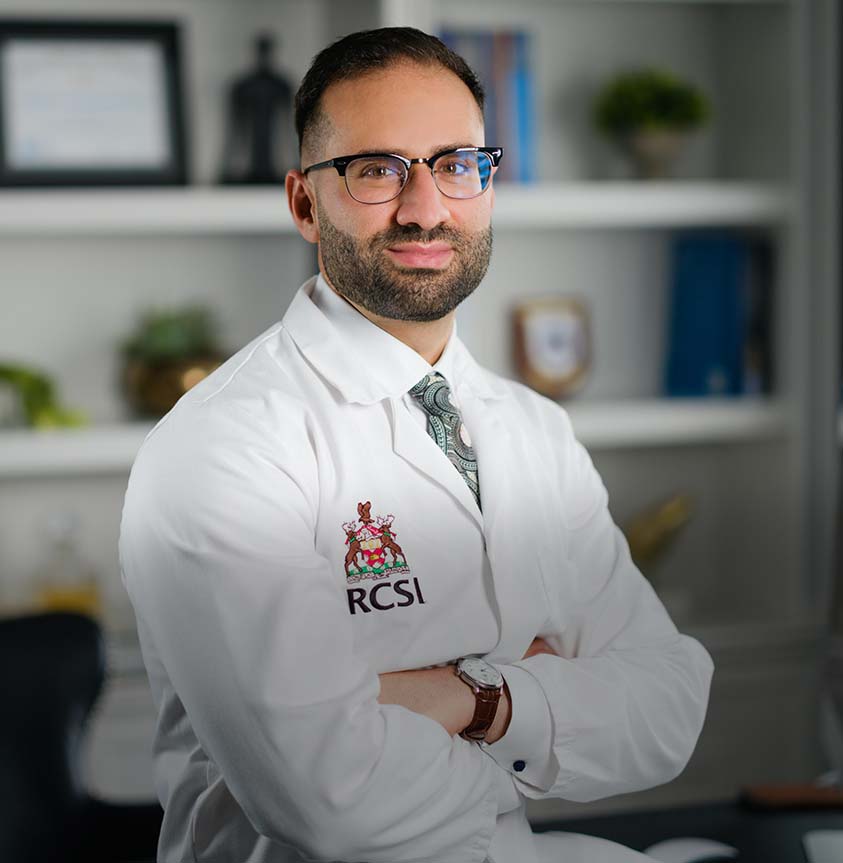
I recommend and prescribe orthodontic treatments to my patients as if they were my own family and I value meaningful relationships based on communication, confidence and trust.

“We highly recommend Dr Erfan Sallom, he transformed our daughter's teeth and she’s extremely happy with her beautiful smile! We were looking for a Orthodontist...”

“I was very anxious about orthodontic treatment and as such delayed it for years. I had no need to be nervous with the expertise and...”
“I would really recommend anyone to Dr Erfan Salloum, my experience with Erfan was amazing. I had no issue he was very knowledgeable about his...”
“I have just finished my two year orthodontic treatment with Dr Erfan and I would highly recommend. He explained everything perfectly about the treatment plan...”