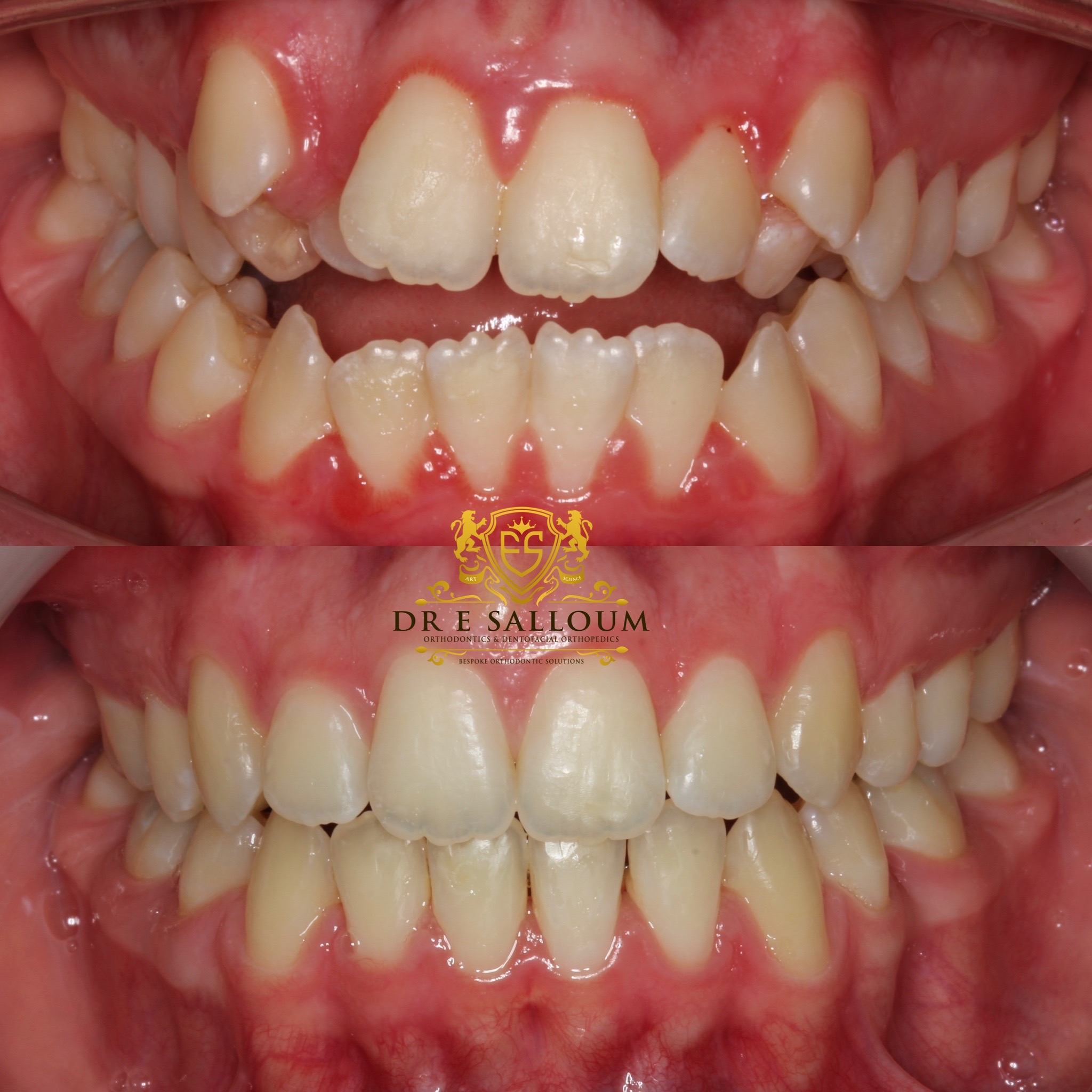
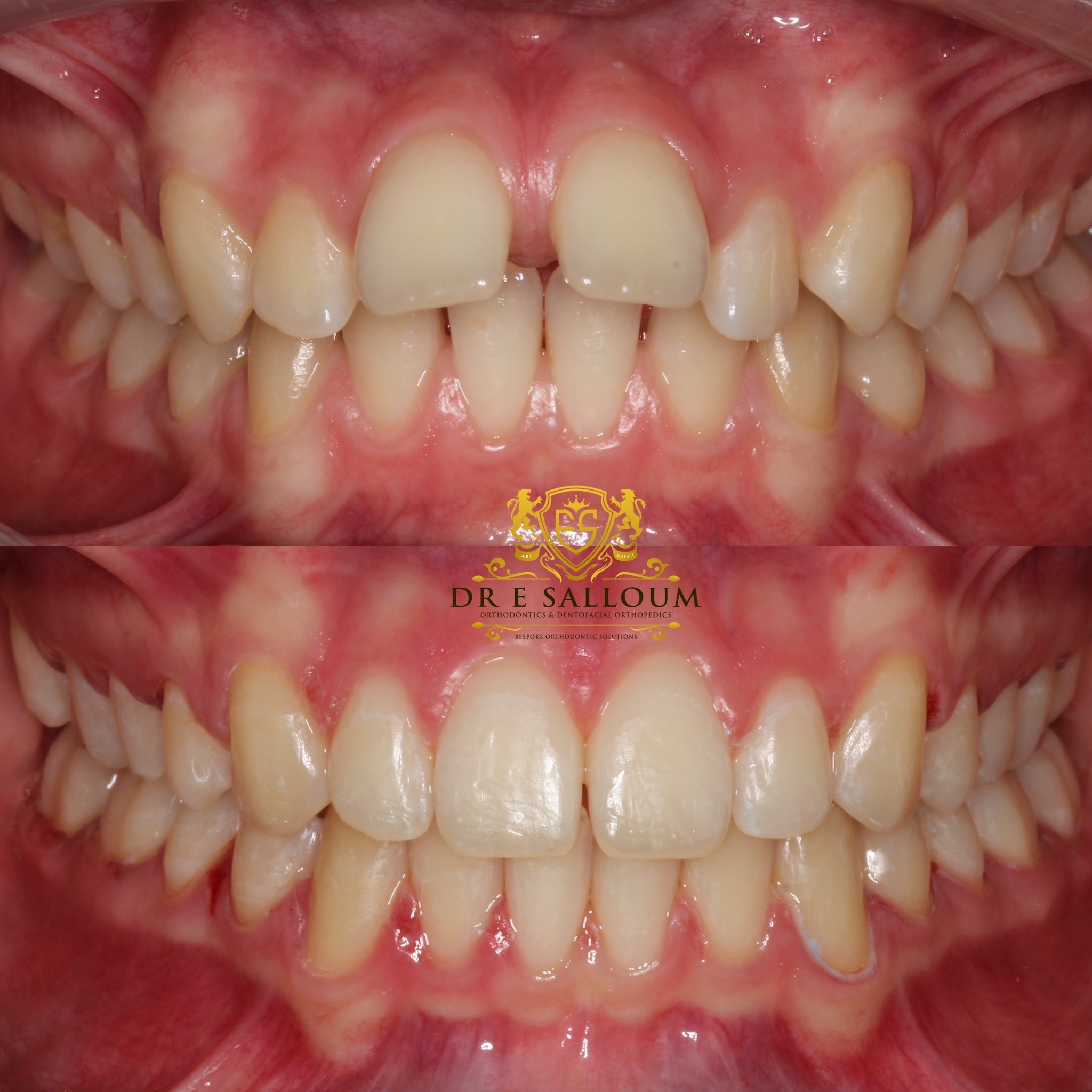
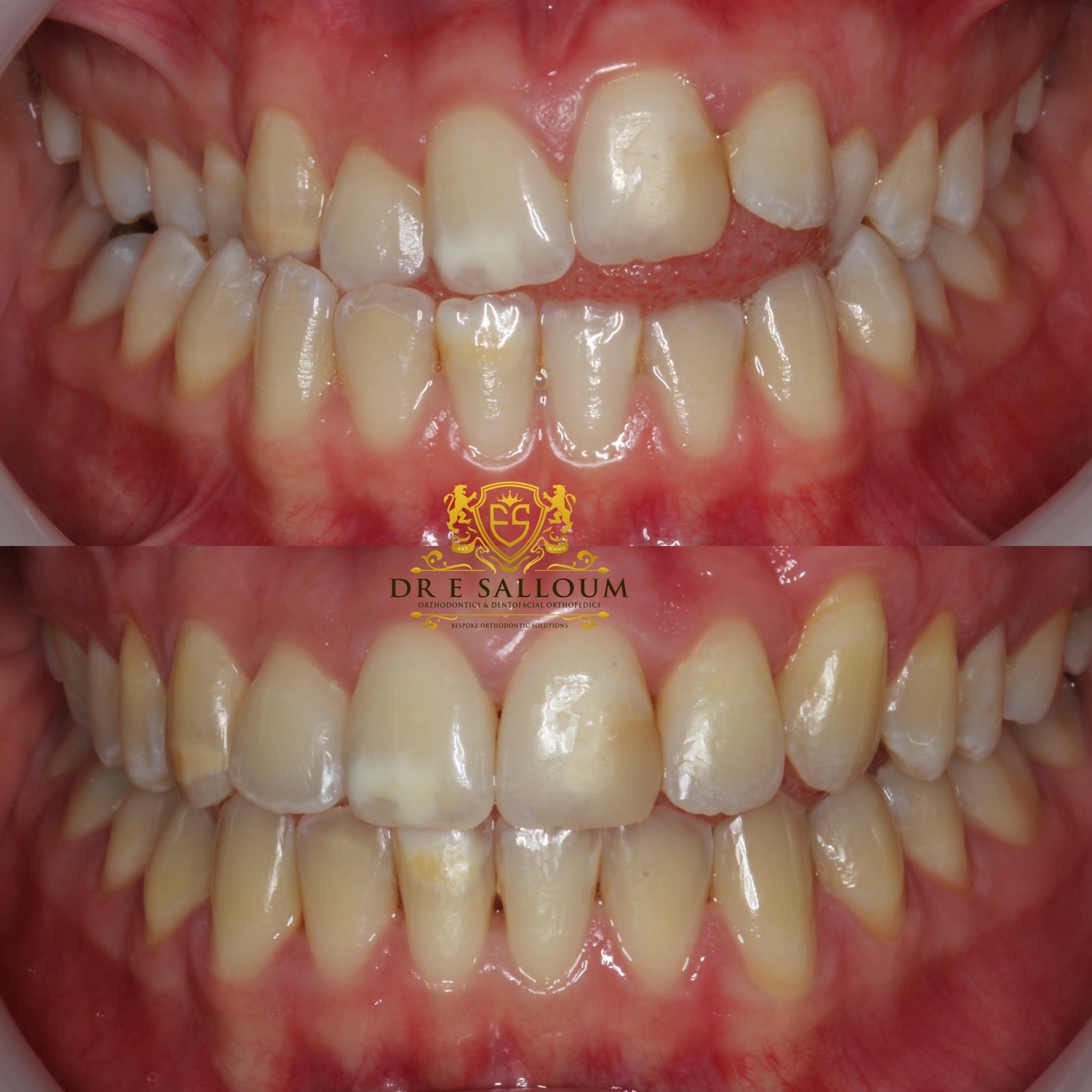
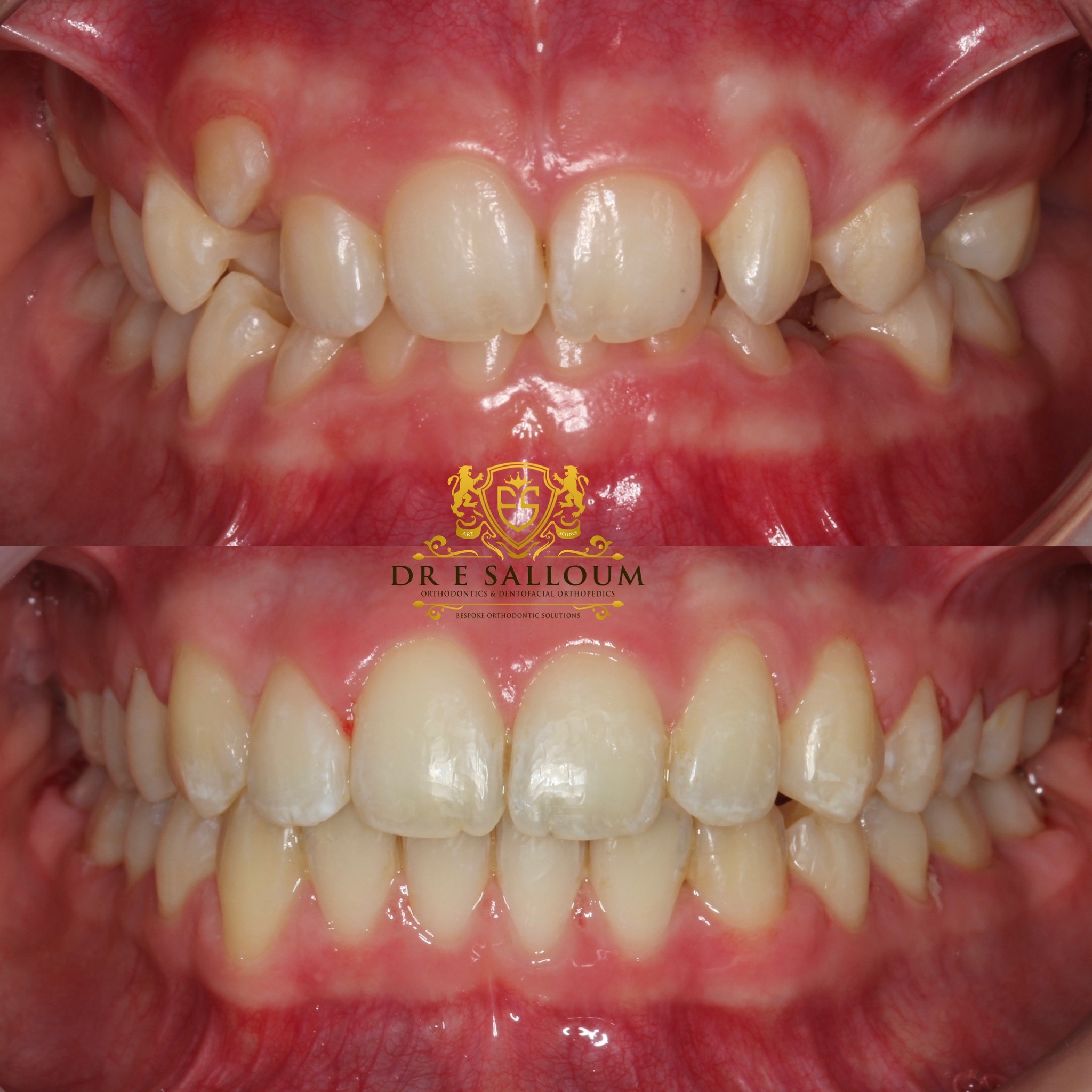
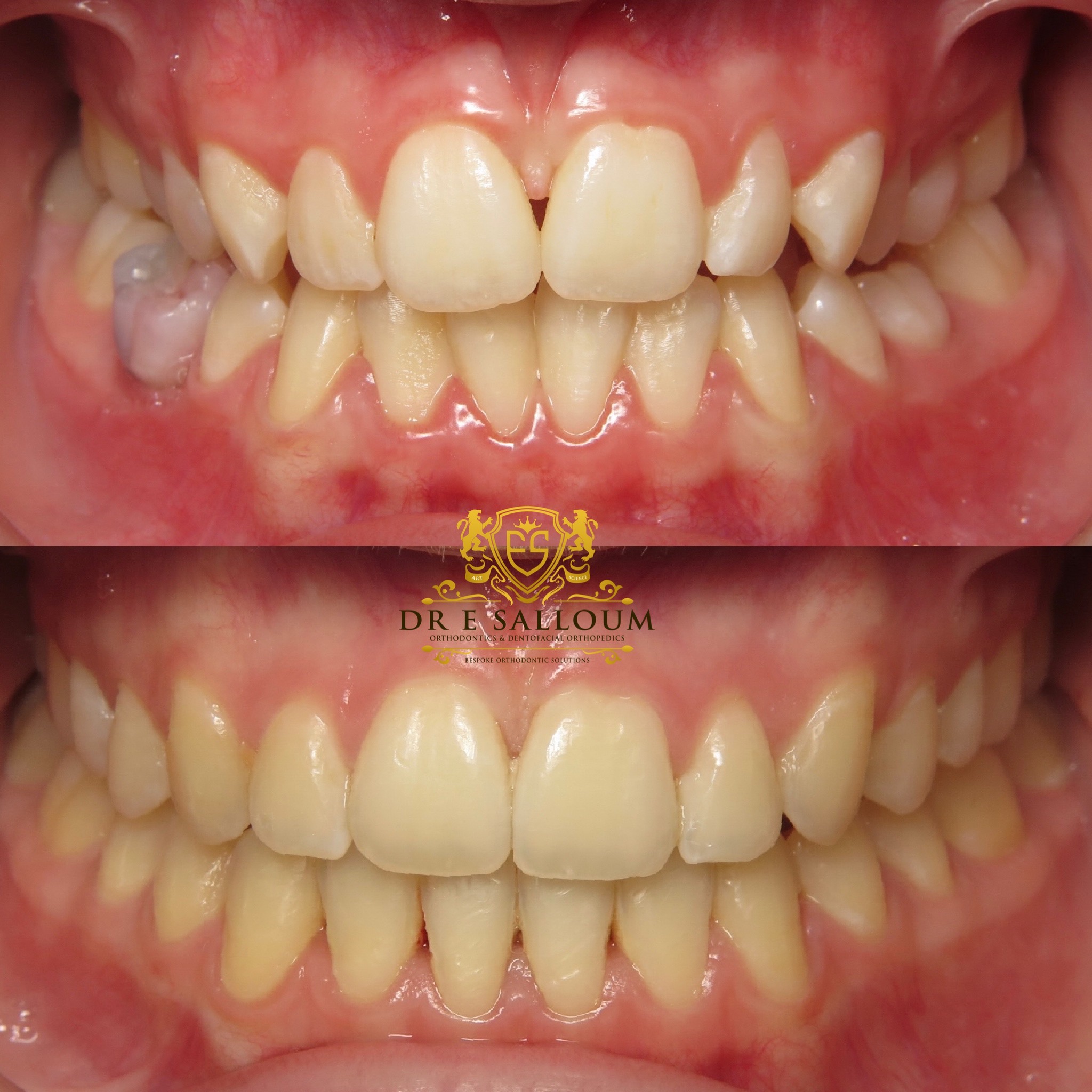
An underbite, also called a Class III bite, occurs when the lower jaw sits ahead of the upper jaw. In many cases, the problem is not the lower jaw. The upper jaw (maxilla) often sits too far back. Orthodontic treatment sometimes aims to move the upper jaw forward. In selected cases, palatal expansion combined with a facemask can help reposition the upper jaw slightly forward and downward. However, this approach has limits. Patients must understand both its potential benefits and its limitations before starting treatment.
Several factors can create a Class III bite. The most common causes include:
• A small or retrusive upper jaw (maxillary deficiency)
• A large or forward-positioned lower jaw
• A combination of both problems
• Genetic growth patterns
When the upper jaw sits too far back, treatment may focus on moving the maxilla forward. Orthodontists can attempt this with orthopaedic appliances during growth or with surgical procedures in adults.
MARPE stands for Mini-screw Assisted Rapid Palatal Expansion. This appliance widens the upper jaw using small temporary screws placed in the palate. These screws anchor the device directly to the bone. Traditional expanders rely on teeth for support. They work best in young children whose palatal suture remains flexible.
In teenagers and adults, the suture becomes stronger. Tooth-borne expanders often fail to produce true skeletal expansion. MARPE improves expansion by applying force directly to the upper jaw. This technique can correct narrow upper jaws and crossbites.
Orthodontists sometimes combine MARPE with facemask therapy in mild to moderate Class III cases. A facemask sits outside the mouth and rests on the forehead and chin.
Elastics connect the mask to hooks on the upper appliance. These elastics apply gentle forward traction to the upper jaw.
Expansion loosens the sutures of the maxilla temporarily. This creates a window where the upper jaw may respond to forward orthopaedic forces. In some patients, this combination can move the maxilla slightly forward and downward. However, the amount of movement remains limited (2-5 mm)
In older teenagers and adults, the maxilla connects firmly to surrounding bones. One key structure is the pterygomaxillary junction.
This junction anchors the back of the upper jaw to the pterygoid plates.
When this area resists expansion and forward movement of the upper jaw, orthodontists may recommend surgical facilitation.
A surgeon weakens or splits the pterygomaxillary suture. This step allows the maxilla to expand more easily and also improves the response to facemask forward traction. Although this procedure is less invasive than full jaw surgery, it still counts as surgery. Patients usually require 7 to 14 days of recovery.
Surgically assisted expansion combined with facemask traction can help in some cases. However, the results remain less predictable than jaw surgery, and several limitations exist.
The amount of forward movement often remains modest, and treatment also takes longer. In addition, the final facial improvement may be smaller than what surgery can achieve. For these reasons, this approach usually suits:
• Mild to moderate Class III discrepancies
• Patients who prefer to avoid full orthognathic surgery
• Situations where small skeletal improvements are sufficient
Severe skeletal discrepancies usually require surgical correction.
Orthognathic surgery allows surgeons to reposition the upper jaw precisely. This procedure can advance the maxilla to the ideal position in a single operation.
Compared with expansion and facemask therapy, surgery provides several advantages. These include:
• Greater skeletal correction
• More predictable results
• Better facial profile improvement
• Faster achievement of the final jaw position
It is important to recognise that surgically facilitated MARPE is still a surgical procedure. When the expected improvement remains small, the difference between the two approaches becomes smaller than many patients expect.
Every Class III case differs. A detailed diagnosis determines the most suitable treatment. My assessment usually includes:
• Clinical examination followed by a digital scan and pictures of the face and teeth
• Cephalometric analysis
• 3D CBCT imaging
• Evaluation of skeletal maturity
These tools help identify the exact cause of the underbite. Once we understand the underlying problem, we can design the most appropriate treatment plan.
At Lusk Orthodontics, we use advanced digital diagnostics and three-dimensional imaging to assess jaw relationships accurately. Some patients benefit from skeletal expansion and orthopaedic correction. Others achieve better results with orthognathic surgery. The key lies in precise diagnosis and personalised treatment planning.
If you are concerned about an underbite or Class III bite, I can help determine the best treatment option. Click here to book a consultation
Back to Blog
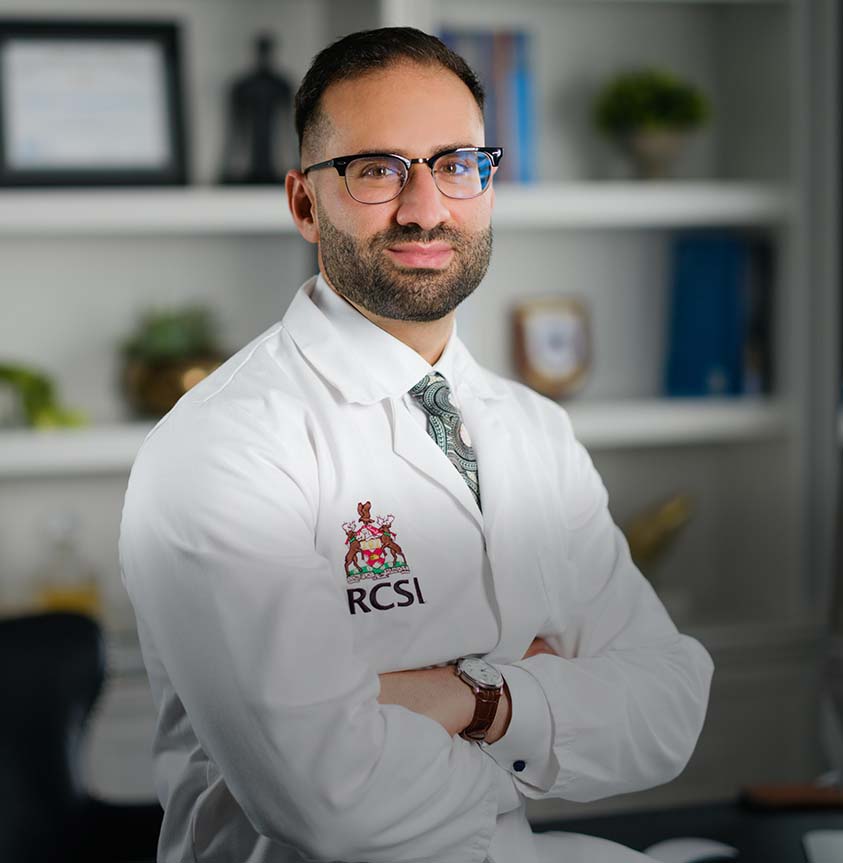
I recommend and prescribe orthodontic treatments to my patients as if they were my own family and I value meaningful relationships based on communication, confidence and trust.

“We highly recommend Dr Erfan Sallom, he transformed our daughter's teeth and she’s extremely happy with her beautiful smile! We were looking for a Orthodontist...”

“I was very anxious about orthodontic treatment and as such delayed it for years. I had no need to be nervous with the expertise and...”
“I would really recommend anyone to Dr Erfan Salloum, my experience with Erfan was amazing. I had no issue he was very knowledgeable about his...”
“I have just finished my two year orthodontic treatment with Dr Erfan and I would highly recommend. He explained everything perfectly about the treatment plan...”