By Dr Erfan Salloum, Specialist Orthodontist
BDS, MFD RCSI, DClinDent (Orth), MOrth RCSEd, FFD (Orth) RCSI, FDS RCSEng, FDS RCPSG. Diplomate of the European Board of Orthodontics (EBO) and European Board of Aligner Orthodontists (EBAO), British Orthodontic Society Maurice Berman Prize Winner 2026, Updated October 2026.
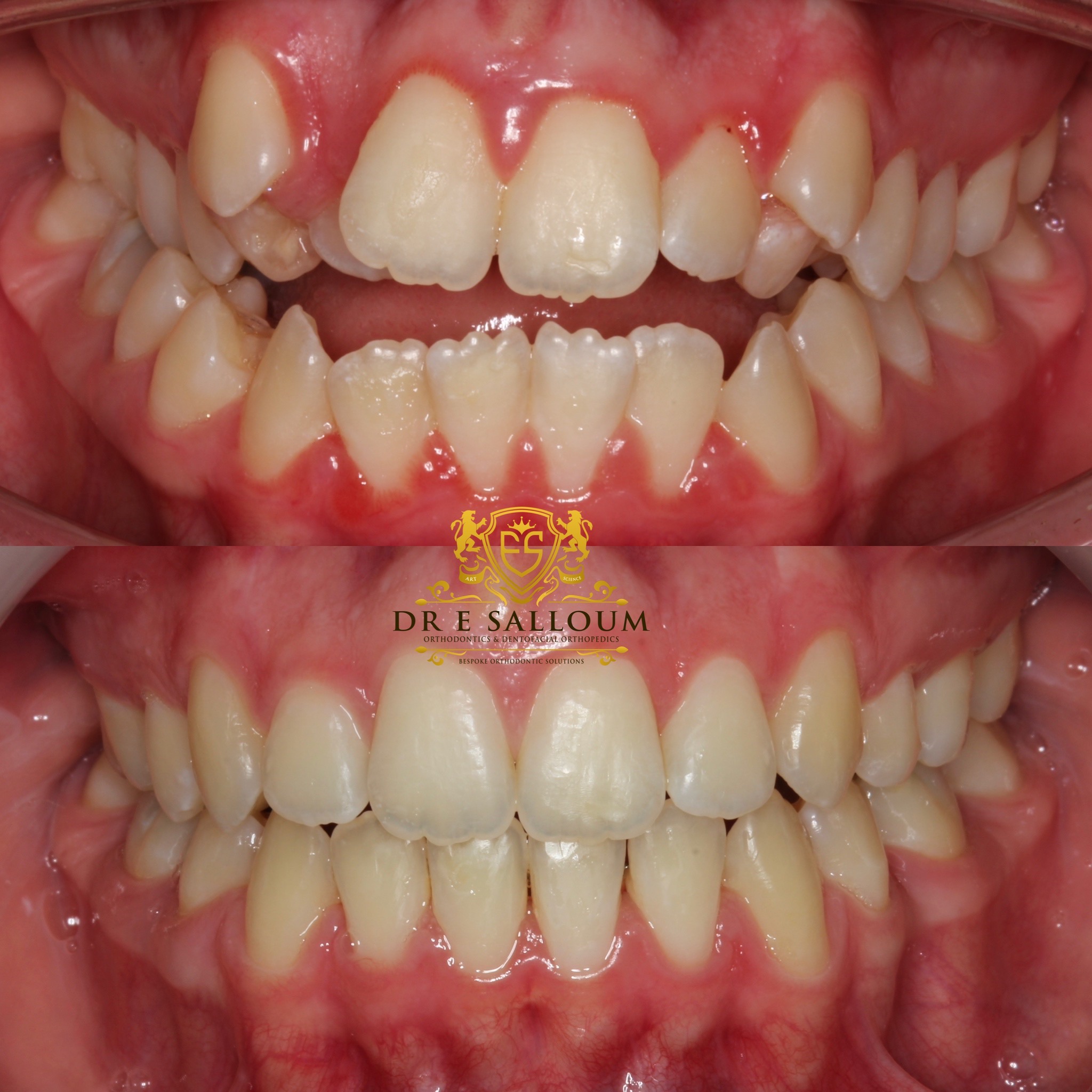
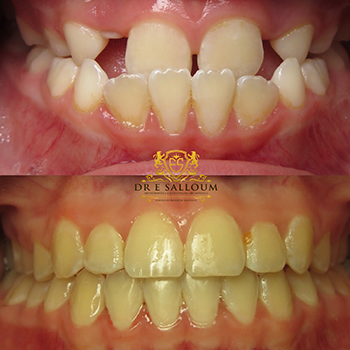
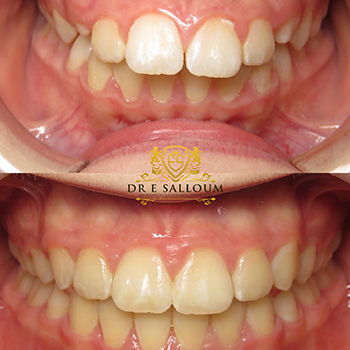
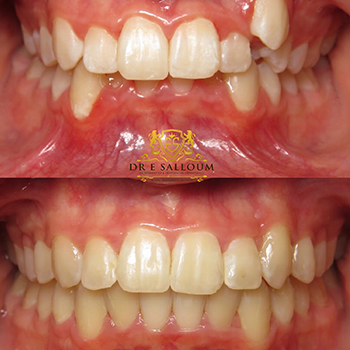
Jaw growth modification is orthodontic treatment that aims to improve the relationship between the jaws while a child is still growing. Also called dentofacial orthopaedics, it can help selected children with prominent front teeth, an underbite or other developing bite problems.
However, treatment cannot produce unlimited jaw growth or guarantee a particular facial shape. The response depends on the diagnosis, the child’s stage of growth and the treatment used.
I provide assessments for children and adolescents at Lusk Orthodontics in North County Dublin. My first priority is to establish whether treatment would help now, or whether monitoring growth is the better choice.
Orthodontic treatment moves teeth into better positions. Dentofacial orthopaedics aims to influence the relationship or dimensions of the jaws during development. In practice, many appliances produce a combination of dental and skeletal changes.
For example, a functional appliance may hold the lower jaw forwards while the child is growing. An upper jaw expander addresses a narrow upper arch. A reverse-pull facemask may help bring an underdeveloped upper jaw forwards.
These treatments address different problems. Choosing the right approach starts with identifying whether the discrepancy comes mainly from the teeth, the jaws or both.
Treatment can influence a developing bite, but the amount of additional skeletal change varies.
Functional appliances can reduce the prominence of upper front teeth. However, a substantial part of the correction comes from changes in tooth position. It would be misleading to describe every improvement as new jaw growth or to promise a permanent increase in lower jaw size. Cochrane
When assessing suitability for jaw growth modification, I consider:
The aim is a realistic improvement in the bite. Some children will still need comprehensive orthodontic treatment, and severe skeletal discrepancies may require jaw surgery after growth.
I recommend an initial assessment at around six to nine years, or earlier if there is an obvious underbite, crossbite or another specific concern.
An assessment does not necessarily mean starting treatment. It provides an opportunity to identify problems and plan the most appropriate timing.
A Class II bite may involve a lower jaw that sits behind the upper jaw, prominent upper teeth, or both.
Functional appliance treatment is often timed around the adolescent growth spurt. Calendar age provides only a rough guide: children mature at different rates, so treatment should follow an individual growth assessment. British Orthodontic Society (BOS …
Earlier treatment may be appropriate when prominent front teeth are at greater risk of injury. However, routinely starting treatment in two phases does not generally produce a better final Class II result than one course of treatment in adolescence. Cochrane
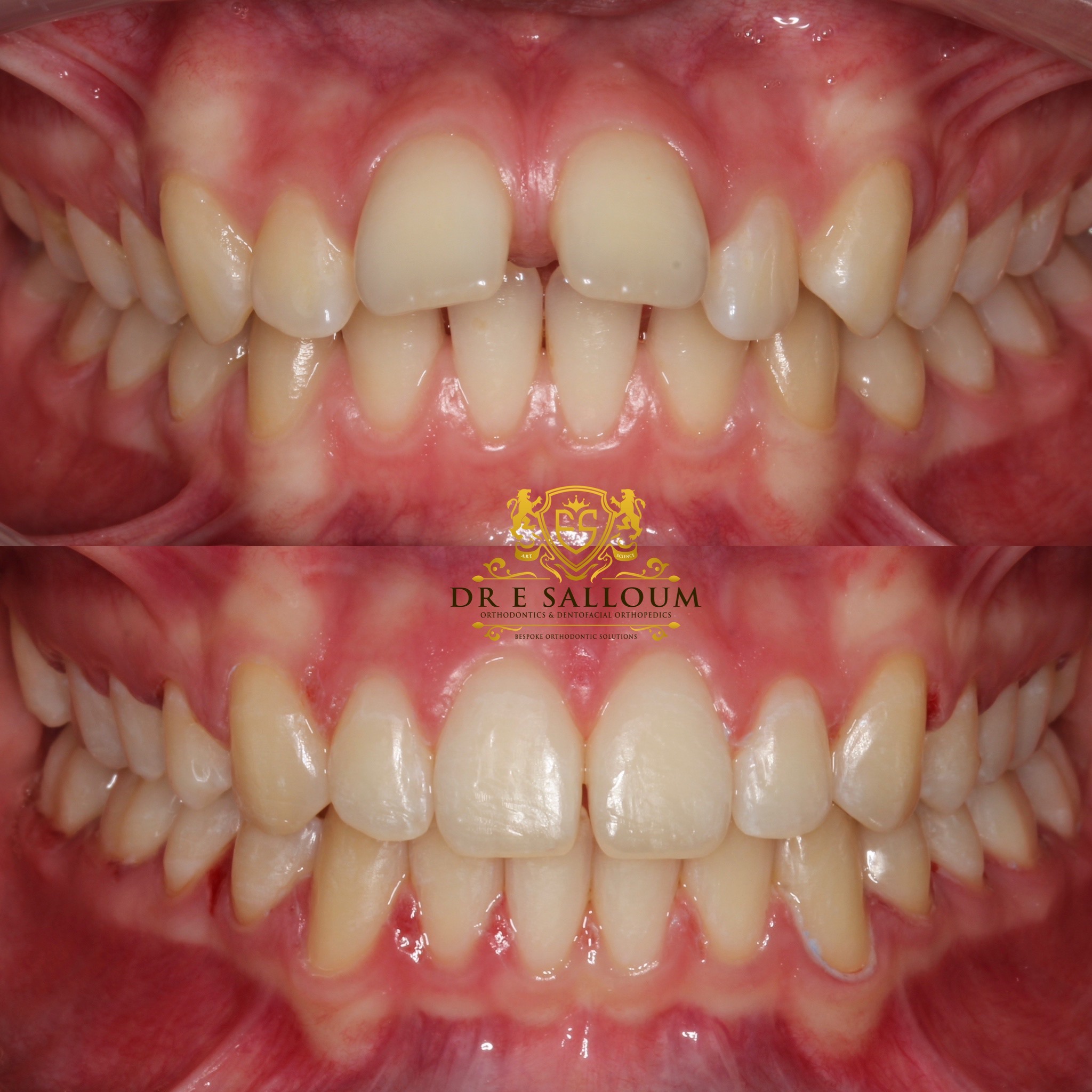
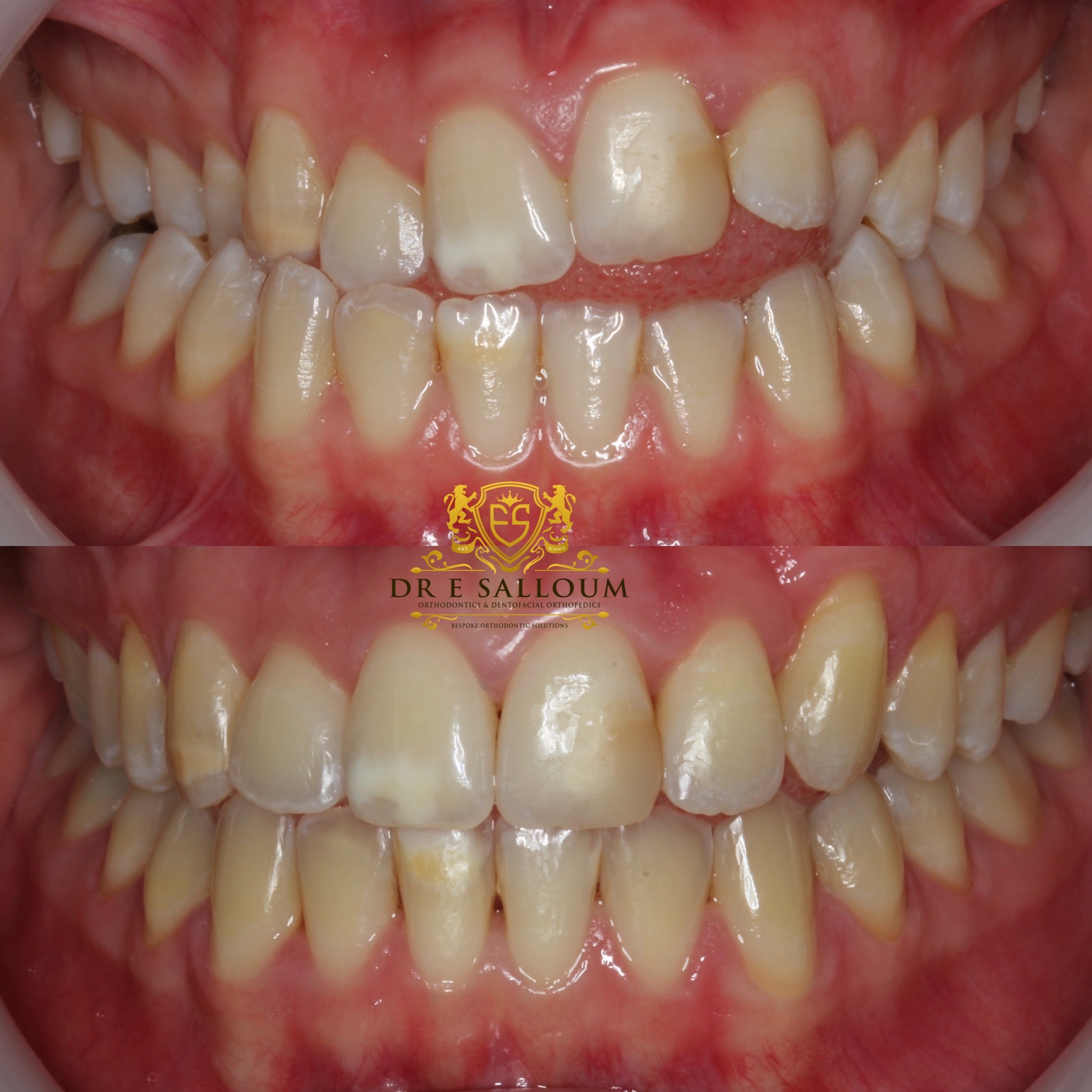
An underbite deserves early assessment. In selected younger children, treatment can improve the relationship between the upper and lower jaws.
The cause matters. An underdeveloped upper jaw, a prominent lower jaw and a bite that makes the lower jaw slide forwards require different considerations. Continued growth can also change the result, so monitoring remains important.
A crossbite occurs when some upper teeth bite inside the lower teeth. If it causes the lower jaw to shift sideways when closing, earlier treatment may be recommended.
Expansion is considered when the examination identifies a width problem. It is not a routine treatment for every child with crowding.
Functional appliances hold or guide the lower jaw into a forward position to help correct a Class II bite. They may be removable or fixed.
A Twin Block consists of removable upper and lower appliances with angled biting surfaces. These guide the lower jaw forwards when the mouth closes.
Successful treatment depends on wearing the appliance as prescribed. I assess whether a child is ready to manage this responsibility before recommending it.
Read our publications on the Twin-Block appliance.
MARA stands for Mandibular Anterior Repositioning Appliance. It is attached to the teeth and guides the lower jaw forwards during closure.
A MARA appliance may be suitable for a growing patient who needs Class II correction. It can be used alongside fixed braces as part of a coordinated treatment plan. The resulting correction includes changes in tooth position and may include a skeletal response.
A Herbst appliance uses fixed telescopic components to maintain a forward lower jaw position. As with other functional appliances, its suitability depends on the bite, growth stage and treatment objectives.
No appliance is best for every child. My recommendation considers the clinical problem, likely cooperation, comfort, oral hygiene and the movements required.
For an explanation of the underlying bite problem, read “Why Do My Front Teeth Stick Out? Class II Malocclusion Explained.”
These terms are often confused.
A child can have an increased overjet, a deep overbite, or both. Identifying the difference helps determine whether treatment should focus on tooth position, the jaw relationship or a combination.
My article “Large Overbite – Treatment Options in Dublin” explains the available approaches in more detail.
A reverse-pull facemask applies forward traction to the upper jaw through an appliance inside the mouth. It may be recommended for a growing child whose upper jaw is relatively underdeveloped.
If the upper jaw is also narrow, palatal expansion may form part of treatment. However, expansion is not automatically required for every facemask patient. Evidence does not clearly establish that adding expansion improves forward jaw correction in all cases. Cochrane
Early treatment can improve the bite in selected children, but it cannot guarantee that later jaw surgery will be avoided. Long-term results depend partly on subsequent growth, and the evidence about preventing surgery remains uncertain. Cochrane
Functional appliances and myofunctional therapy have different roles.
Functional appliances apply mechanical guidance to help correct the bite. Myofunctional therapy involves exercises addressing oral muscle function, such as tongue posture, swallowing and lip seal.
I may recommend myofunctional therapy as an adjunct when a child has a specific functional need. I do not present it as a substitute for correcting a significant skeletal discrepancy or promise that exercises alone will grow or widen the jaws.
If there are concerns about persistent mouth breathing or snoring, I may also recommend an appropriate medical or ENT assessment.
Many children need fixed braces after functional appliance treatment to align the teeth and refine the bite. In some cases, the two treatments overlap.
Treatment is not always divided into an early “Phase One” and a later “Phase Two”. For some children, a coordinated course during adolescence is more appropriate.
I will explain the proposed sequence, why each stage is needed and whether there is likely to be a period of monitoring between stages.
An assessment considers your child’s teeth, bite, facial proportions and development. Depending on their needs, it may include:
A CBCT scan is not a routine part of a child’s growth assessment. I only request one when there is a specific clinical question that requires three-dimensional imaging.
Following the assessment, I explain the findings, available options and the benefits and limitations of treatment.
My approach is to recommend treatment when there is a clear reason to intervene.
Some children benefit from early correction. Others benefit from waiting until a more suitable growth stage. Where monitoring is appropriate, I explain what we are watching for and when to review.
I also discuss practical demands and possible problems, including initial discomfort, appliance breakages, unwanted tooth movements and the importance of oral hygiene. A successful plan must be manageable for the child and their family.
No single age suits every child. I recommend an initial assessment around seven to nine years to identify developing problems. I may treat selected underbites and crossbites earlier, while I usually time functional treatment for a retrusive lower jaw around the adolescent growth spurt.
A Twin Block can improve a Class II bite in a growing child by moving teeth and influencing the developing jaw relationship. Each child responds differently, so I cannot guarantee a specific amount of additional, lasting lower jaw growth.
No. I attach the MARA appliance to the teeth, so your child cannot remove it at home. Your child will need to clean it carefully, follow dietary advice and attend regular appointments.
Once facial growth finishes, we cannot use childhood growth to correct the jaw relationship. Depending on the problem, I may recommend orthodontic tooth movement, camouflage treatment or jaw surgery.
Adult skeletal expansion addresses a separate problem: a narrow upper jaw. It widens the upper jaw rather than restarting facial growth.
Early treatment may improve a developing jaw discrepancy, but I cannot guarantee that it will prevent surgery. Severe discrepancies or unfavourable later growth may still make jaw surgery necessary.
No. I assess the severity, injury risk, symptoms, growth stage and likely benefit before recommending treatment. When immediate treatment offers little benefit, I recommend monitoring your child’s development.
If you are concerned about your child’s prominent teeth, underbite or jaw development, an assessment can clarify the next step.
I see children and adolescents at Lusk Orthodontics, serving families from Lusk, Rush, Skerries, Swords, Malahide, Donabate and the wider Dublin area.
You will receive a clear explanation of the problem and whether treatment is recommended now or later.
Book a Growth Assessment
Ask About Your Child’s Bite

“We highly recommend Dr Erfan Sallom, he transformed our daughter's teeth and she’s extremely happy with her beautiful smile! We were looking for a Orthodontist...”

“I was very anxious about orthodontic treatment and as such delayed it for years. I had no need to be nervous with the expertise and...”
“I would really recommend anyone to Dr Erfan Salloum, my experience with Erfan was amazing. I had no issue he was very knowledgeable about his...”
“I have just finished my two year orthodontic treatment with Dr Erfan and I would highly recommend. He explained everything perfectly about the treatment plan...”