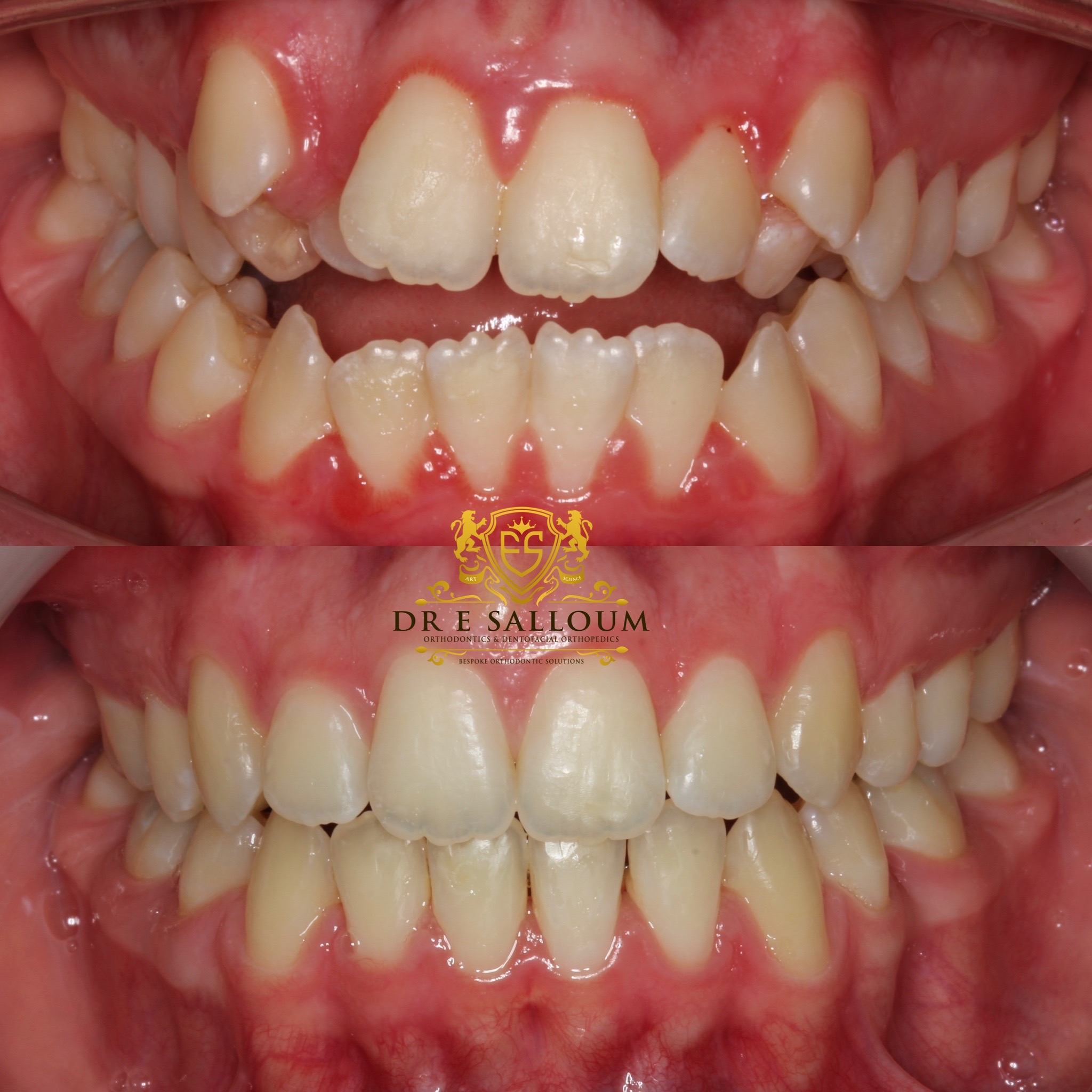
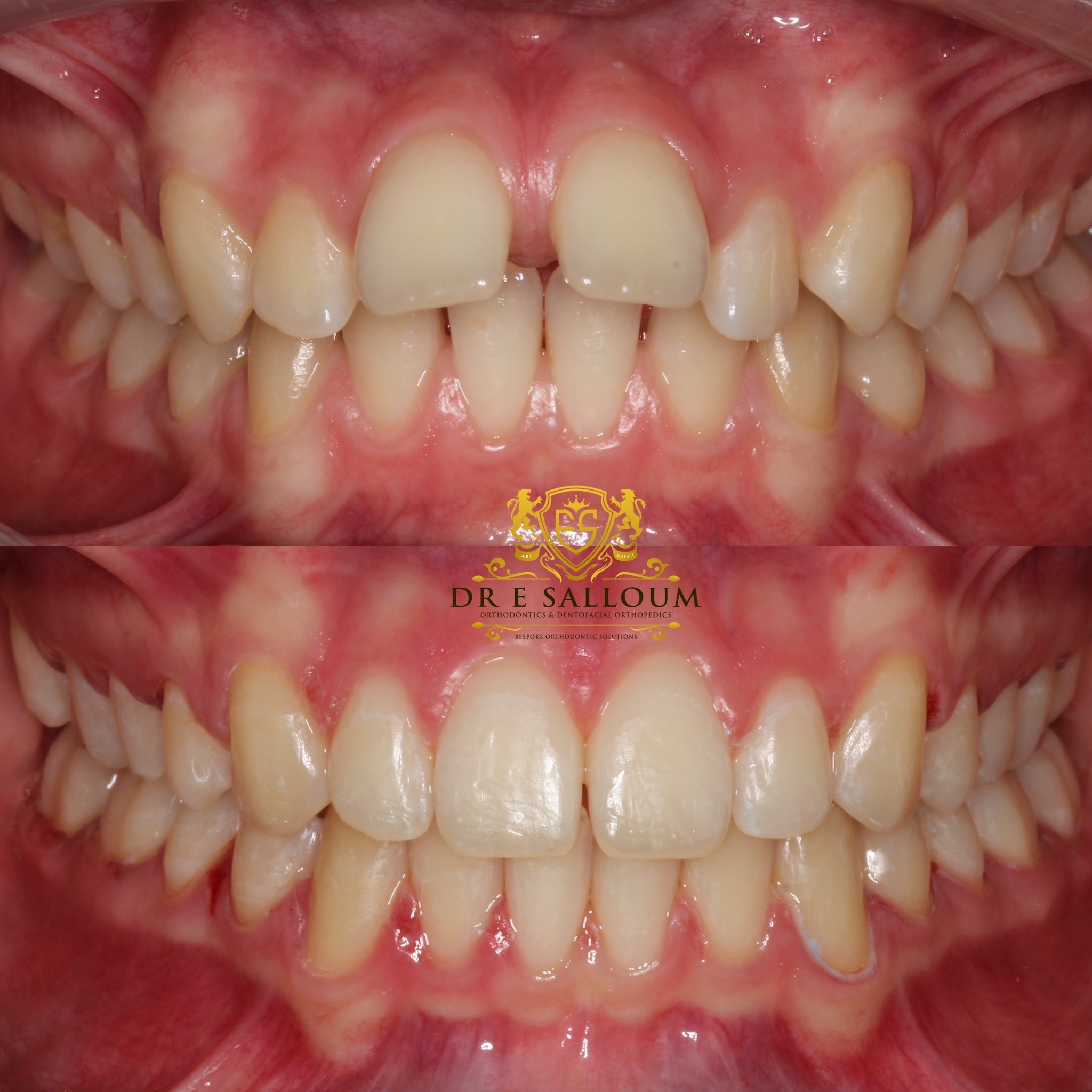
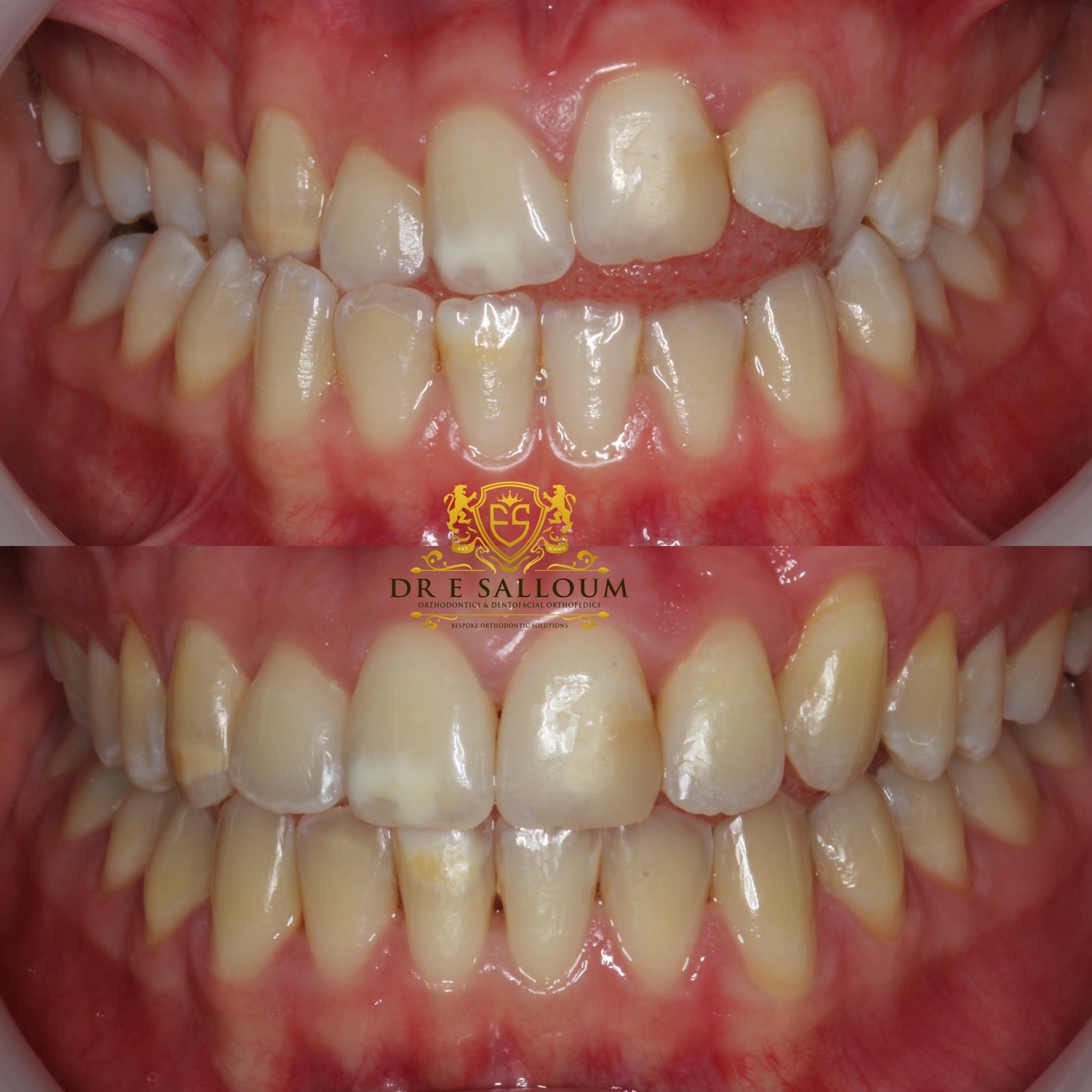
Written by Dr Erfan Salloum
Specialist Orthodontist | Founder & Clinical Director, Lusk Orthodontics
BDS, PGCert(Orth), DClinDent(Orth), MsLing(Orth), MFD RCSI, MFDS RCPSG, MOrth RCSEd, FFD(Orth) RCSI, MOrth RCSEng, FDS RCSEng, FDS RCPSG | Diplomate, European Board of Orthodontics (EBO) | Diplomate, European Board of Aligner Orthodontics (EBAO) | Titular Member, European Society of Lingual Orthodontics (ESLO) | Active Member, World Society of Lingual Orthodontics (WSLO)
Last reviewed: July 2026
As a Specialist Orthodontist, one of the questions I am asked most frequently by parents is:
“When should my child have braces?”
For many years the standard advice has been straightforward:
“Arrange an orthodontic assessment around the age of seven or eight.”
For many children, this is excellent advice.
However, after treating children with a wide variety of orthodontic problems over the years, I have learned that age alone should never determine when a child is assessed or treated.
Some children genuinely benefit from waiting.
Others benefit enormously from early intervention.
The difference is not their age.
The difference is the diagnosis.
One of my responsibilities as a Specialist Orthodontist is deciding not only what treatment a child may need, but whether treatment is needed at all—and, if so, when it should begin.
Sometimes the correct recommendation is to start treatment.
Sometimes it is to monitor growth for several years.
Both decisions are equally valuable when they are based on careful diagnosis rather than routine.
That is why my philosophy has always been simple:
Treat children—not just teeth.
Many parents understandably assume orthodontics is simply about straightening teeth.
Although beautifully aligned teeth are an important outcome of treatment, they are rarely the starting point of my assessment.
When a child attends my practice for the first time, I am asking a much bigger question:
Why has this bite developed this way?
Crooked teeth are often a symptom rather than the underlying problem.
The real issue may involve how the upper and lower jaws have grown, how the face is developing, how the permanent teeth are erupting, or how the child breathes and functions.
Unless these factors are properly understood, treatment risks addressing only the visible problem while overlooking its underlying cause.
This is why I believe a comprehensive orthodontic assessment should look far beyond the alignment of the teeth.
Every child is different.
No two children grow in exactly the same way, and no two treatment plans should be identical.
During an orthodontic assessment I routinely evaluate:
Depending on the findings, additional investigations such as digital records or 3D CBCT X-ray imaging may occasionally be recommended where clinically justified.
My aim is always the same:
To understand why the problem exists before deciding how—or even whether—to treat it.
Parents often ask whether they have brought their child “too early.”
In reality, I rarely think of a consultation as being too early.
Even if no treatment is required, an assessment provides valuable information about how a child is growing and whether any future problems are likely to develop.
In many cases, my recommendation is simply:
“Everything looks healthy. Let’s review growth in twelve months.”
Parents often leave feeling reassured because they know their child has been assessed thoroughly and that treatment, if needed, will begin at the most appropriate time.
Equally, some children present with conditions where waiting would allow the problem to become more difficult—or sometimes impossible—to correct using growth alone.
The purpose of an early assessment is therefore not to start treatment.
It is to determine whether treatment should:
That distinction is one of the most important decisions in specialist orthodontics.
One of the most common misconceptions I encounter in practice is that a child cannot have a narrow upper jaw unless there is an obvious crossbite.
In reality, I regularly diagnose children whose bite appears relatively normal despite having a significant deficiency in the width of the upper jaw.
How is this possible?
The answer lies in dental compensation.
Children have an extraordinary ability to adapt as they grow.
When the upper jaw is narrow, the upper teeth may tip outwards while the lower teeth tip inwards.
These compensations can disguise the underlying skeletal problem.
To parents—and sometimes even to clinicians—the bite appears acceptable.
The jaws tell a different story.
This is why I never assess transverse jaw development by looking only at the teeth.
Clinical examination, digital records and, where appropriate, 3D CBCT X-ray imaging allow me to distinguish between:
That distinction is fundamental because the treatment for each is often completely different.
Parents often associate orthodontics with braces.
I see it differently.
Braces are simply one of many tools available to an orthodontist.
Diagnosis is where orthodontics truly begins.
Without an accurate diagnosis it is impossible to determine:
In my opinion, diagnosis is the single most valuable part of every orthodontic consultation.
It influences every decision that follows.
One of the most polarising topics in orthodontics is when treatment should begin.
Some clinicians advocate waiting until almost all the permanent teeth have erupted before starting treatment. Others recommend treating children at a much younger age.
Like many debates in healthcare, the answer is rarely found at either extreme.
In my opinion, both approaches can be appropriate—but only when they are supported by a careful diagnosis.
I do not believe in treating every child early.
Equally, I do not believe every child should simply be told to “wait until all the adult teeth are through.”
Every child deserves an individual assessment.
One of the most rewarding aspects of being a Specialist Orthodontist is identifying those children who genuinely benefit from early intervention while avoiding unnecessary treatment in those who do not.
Good orthodontics is not about treating early.
It is about treating at the right time.
Many people assume that the purpose of early orthodontic treatment is simply to straighten teeth before secondary school.
In reality, this is often one of the least important reasons.
Depending on the individual child, early treatment may be aimed at:
These objectives are very different from simply aligning teeth.
In many children, comprehensive braces will still be required later.
Early treatment is not necessarily intended to avoid braces—it is intended to improve the conditions under which later treatment takes place.
One of the principles that guides my clinical practice is that children should never be assessed solely on the appearance of their teeth.
The face, jaws, muscles, tongue, airway and teeth all develop together.
Crowded teeth may actually be the result of an underlying jaw deficiency rather than a lack of space between the teeth.
Similarly, a narrow smile may indicate that the upper jaw has not developed to its full width.
Even apparently well-aligned teeth do not always mean the jaws and face are developing normally.
If we focus exclusively on the teeth, we risk overlooking the underlying problem.
This is one of the reasons I believe orthodontic diagnosis should always consider the child as a whole.
Parents often mention that their child sleeps with an open mouth, snores occasionally or seems unable to breathe comfortably through their nose.
These concerns should never be dismissed without proper assessment.
Healthy children should spend the vast majority of the day—and almost all of the night—breathing through their nose.
Persistent mouth breathing is usually a sign that something deserves further investigation.
It does not necessarily mean there is a serious medical problem.
However, it should prompt the question:
Why is this child unable to breathe comfortably through their nose?
That question is often far more important than asking whether braces are needed.
This is an area that has interested orthodontists for decades.
Facial growth is influenced by many factors, including genetics, muscle function, posture and environmental influences.
The relationship between mouth breathing and facial development is complex and continues to be actively researched.
What we do know is that many children with chronic nasal obstruction develop altered patterns of muscle activity and oral posture.
These changes may influence the way the jaws and face develop during growth.
Not every child who mouth breathes develops an orthodontic problem.
Likewise, not every child with crooked teeth is a mouth breather.
However, when I assess a child who presents with chronic mouth breathing, I always consider whether the breathing pattern may be contributing to the orthodontic findings.
This is one of the commonest questions parents ask me.
The honest answer is:
Sometimes—but not always.
I never present orthodontics as a cure for breathing problems.
Breathing is influenced by multiple anatomical and physiological factors, many of which lie outside the scope of orthodontic treatment. However, in carefully selected children, orthodontic treatment can form an important part of the overall management plan. One example is a child with a significantly constricted upper jaw.
The roof of the mouth forms the floor of the nose.
When the upper jaw is narrow, the nasal cavity may also be narrower.
In children whose upper jaw is genuinely constricted, widening the palate also widens the floor of the nasal cavity.
Numerous clinical studies have demonstrated that this can reduce nasal resistance and improve nasal airflow in appropriately selected patients.
From a biological perspective, this is entirely logical.
A wider nasal cavity may allow air to pass more freely through the nose.
For some children, this can make nasal breathing easier.
However, it is equally important to understand the limitations of palatal expansion.
While expansion can widen a constricted upper jaw and, in appropriately selected children, improve nasal airflow, it does not remove enlarged adenoids, reduce the size of enlarged tonsils, treat allergic rhinitis, straighten a deviated nasal septum, or resolve every cause of snoring.
For this reason, I never present palatal expansion as a universal treatment for breathing problems. Instead, I use it to address one specific anatomical problem when a constricted upper jaw forms part of the overall diagnosis.
One of the mistakes I occasionally see is assuming that every child who mouth breathes simply needs a palatal expander.
In my practice, I also see children with genuine upper jaw constriction who have been advised to wait simply because they do not have an obvious crossbite.
Neither approach represents individualised care.
The decision to undertake palatal expansion should always follow a comprehensive clinical assessment.
In my practice, this includes evaluating facial growth, jaw relationships, dental development, tongue posture, breathing history and, where indicated, three-dimensional CBCT X-ray imaging.
Only by bringing all of these findings together can I determine whether expansion is likely to benefit that particular child.
One of the most important messages I try to convey to parents is that sleep-disordered breathing is rarely caused by a single problem.
A child may have:
No single healthcare professional can comprehensively manage every one of these factors.
For this reason, I frequently work alongside ENT consultants, paediatric dentists, oral and maxillofacial surgeons, myofunctional therapists, speech and language therapists, allergists and sleep physicians.
Each professional contributes a different perspective.
Together, we can often provide a far more comprehensive assessment than any of us could achieve independently.
I believe this multidisciplinary approach gives children the greatest opportunity to receive appropriate, evidence-based care tailored to their individual needs.
One of the questions parents often ask me is:
“What treatment will my child need?”
The honest answer is that I don’t know until I have carried out a comprehensive assessment.
One of the biggest misconceptions about orthodontics is that every child with crooked teeth needs braces.
In reality, children present with an enormous variety of dental and skeletal problems. Two children may appear to have similar-looking teeth, yet require completely different treatment because the underlying cause is different.
This is why I never begin by asking:
“Which appliance should I use?”
Instead, I ask:
“What is causing this problem?”
Only then can I decide whether treatment is required, what type of treatment is appropriate and, equally importantly, when it should begin.
One of the commonest reasons parents seek orthodontic advice is crowding.
They notice permanent teeth erupting behind the baby teeth, overlapping incisors or teeth appearing “too large” for the mouth.
Crowding, however, is not a diagnosis.
It is a sign that something has caused insufficient space for the permanent teeth.
That may be because:
Understanding which of these factors is responsible allows me to recommend the most appropriate treatment rather than simply aligning the teeth.
One of the treatments I use most frequently in growing children is palatal expansion.
Its primary purpose is to correct a narrow upper jaw.
Depending on the child’s age and stage of development, expansion may:
Not every child with crowding requires expansion.
Likewise, not every child with a narrow upper jaw has obvious crowding.
Again, diagnosis determines treatment.
Another common reason parents seek orthodontic advice is because the upper front teeth appear very prominent or the lower jaw looks “too far back.”
During periods of active growth, I may recommend functional appliances to encourage favourable changes in jaw relationships.
Examples include:
These appliances work best during periods of active growth.
Timing is therefore critical.
Used too early, they may offer little benefit.
Used too late, valuable growth potential may already have been lost.
One of my responsibilities is identifying when that growth window is likely to occur.
Children with underbites often require particularly careful assessment.
Not every underbite is the same.
Some are caused by:
Treatment therefore depends entirely upon the diagnosis.
In growing children with an underdeveloped upper jaw, early intervention may sometimes allow us to encourage forward development of the maxilla using facemask therapy, often combined with expansion where appropriate.
However, not every child is suitable for this approach.
Growth pattern, age and skeletal maturity all influence the likely outcome.
Thumb sucking, prolonged dummy use and tongue thrusting are common during early childhood.
Many children naturally stop these habits without any long-term consequences.
Persistent habits, however, may influence:
When appropriate, habit-breaking appliances may be recommended as part of treatment.
Equally important is understanding why the habit persists.
Simply stopping the habit without addressing contributing factors may not always produce a stable result.
Parents often ask whether children can be treated with clear aligners instead of braces.
The answer is:
Sometimes.
Clear aligners have transformed orthodontics and are an excellent option for many adolescents.
In younger children, however, their use is much more selective.
Successful aligner treatment depends upon:
For some children, aligners provide an excellent solution.
For others, fixed appliances remain the more predictable option.
The decision should always be based on which appliance is most likely to achieve the desired outcome—not simply on appearance.
No.
This often surprises parents.
Many children who attend my practice do not require immediate treatment.
Some require only monitoring.
Others benefit from a simple interceptive procedure before comprehensive braces become necessary.
In some cases, treatment may never be required.
I regard this as a positive outcome.
An orthodontic assessment should never be viewed as a commitment to treatment.
Its purpose is to provide parents with an accurate diagnosis and a clear understanding of their child’s development.
Parents often arrive asking whether their child needs:
These are understandable questions.
However, appliances do not solve orthodontic problems on their own.
They are simply tools.
My role is to determine which tool—if any—is appropriate for the child sitting in front of me.
The most sophisticated appliance in orthodontics will produce disappointing results if it is used for the wrong diagnosis.
Conversely, a relatively simple appliance used at precisely the right time can produce remarkable improvements.
This is why I always emphasise that orthodontic success depends far more on diagnosis and treatment planning than on the appliance itself.
When looking for a children’s orthodontist in Dublin, I would encourage parents to look beyond photographs of straight teeth and ask about the assessment itself.
A comprehensive orthodontic assessment should include:
In my view, these questions are often far more important than asking which brace system the orthodontist uses.
Will they recommend treatment only when it is genuinely indicated?
These questions are often far more important than asking which brace system they use.
In my view, the best orthodontic treatment begins with an accurate diagnosis, clear communication and a treatment plan tailored to the individual child—not a standard protocol applied to everyone.
For many children, the ideal time for a first orthodontic assessment is around seven or eight years of age.
However, children with mouth breathing, crossbites, jaw discrepancies, delayed eruption, early loss of baby teeth or concerns regarding facial growth may benefit from assessment at an earlier age.
No.
Most do not.
Many children simply require monitoring until growth has progressed further.
The purpose of an early assessment is to determine whether treatment is needed—not to begin treatment routinely.
Orthodontic treatment is not a treatment for breathing disorders.
However, in carefully selected children with a constricted upper jaw, palatal expansion may improve nasal airflow by increasing the width of the nasal floor.
Breathing problems are often multifactorial and may also require assessment by an ENT consultant, allergist or sleep physician.
Yes.
This is something I diagnose regularly.
The teeth may compensate by tipping, making the bite appear relatively normal despite an underlying skeletal deficiency.
This is why comprehensive diagnosis is so important.
Not necessarily.
Some children benefit from early treatment.
Some require only monitoring.
Others may never require orthodontic treatment.
Every recommendation should be based on individual diagnosis.
Sometimes.
Clear aligners are an excellent option for many adolescents and selected younger patients.
However, they are not appropriate for every orthodontic problem.
The appliance should always be chosen according to the diagnosis rather than patient preference alone.
Treatment time varies considerably depending on the child’s age, growth pattern and complexity of the problem.
This is one reason I avoid giving estimates before carrying out a comprehensive assessment.

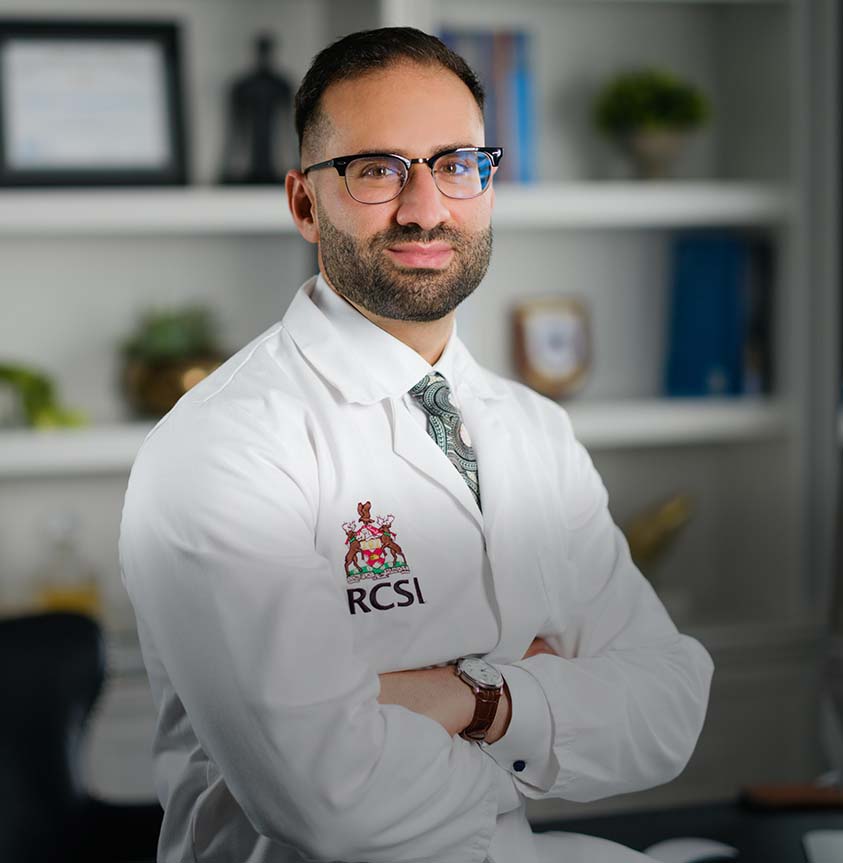
I recommend and prescribe orthodontic treatments to my patients as if they were my own family and I value meaningful relationships based on communication, confidence and trust.

“We highly recommend Dr Erfan Sallom, he transformed our daughter's teeth and she’s extremely happy with her beautiful smile! We were looking for a Orthodontist...”

“I was very anxious about orthodontic treatment and as such delayed it for years. I had no need to be nervous with the expertise and...”
“I would really recommend anyone to Dr Erfan Salloum, my experience with Erfan was amazing. I had no issue he was very knowledgeable about his...”
“I have just finished my two year orthodontic treatment with Dr Erfan and I would highly recommend. He explained everything perfectly about the treatment plan...”